Routine's Construction module gives set-build companies one system for the whole job — builds, phases, and crew, plus a reusable stock catalogue, live availability, quotes, invoices, barcode checkout, and purchase orders. From the first quote to the final strike, without a single spreadsheet.
Phases, materials, labour, transport, Gantt scheduling, and templates — all connected, all in one place.
Track every build from drafting through workshop, scenic, transport, install, and strike. Priority, budget, dates, and status — all on one card.
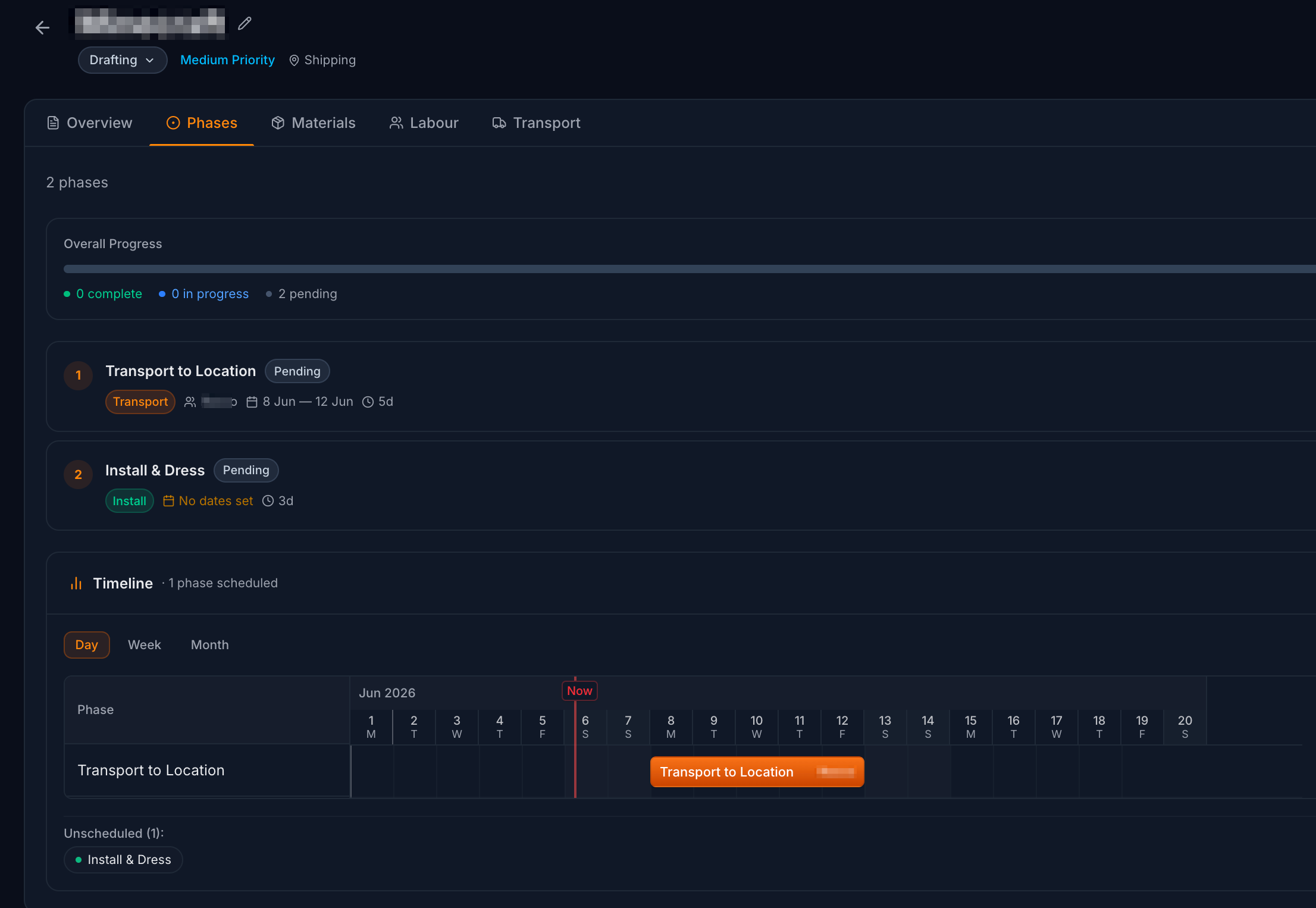
Break each build into department phases — carpentry, CNC, metalwork, paint, scenic art. Assign people, set dates, and track progress with a built-in Gantt timeline.
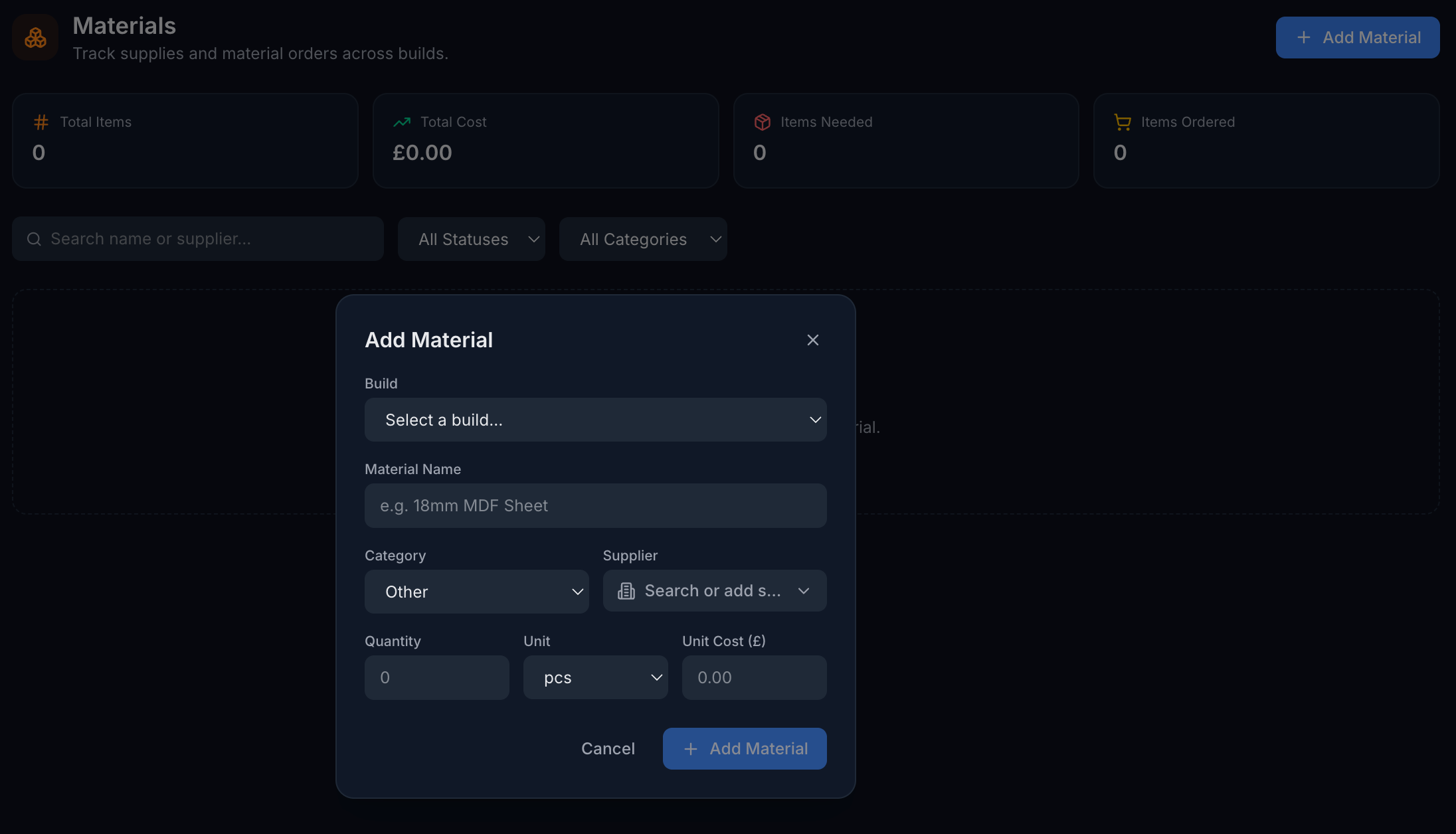
Log every material order with quantity, unit cost, supplier, and delivery status. Know exactly what's been ordered, what's arrived, and what's still needed.
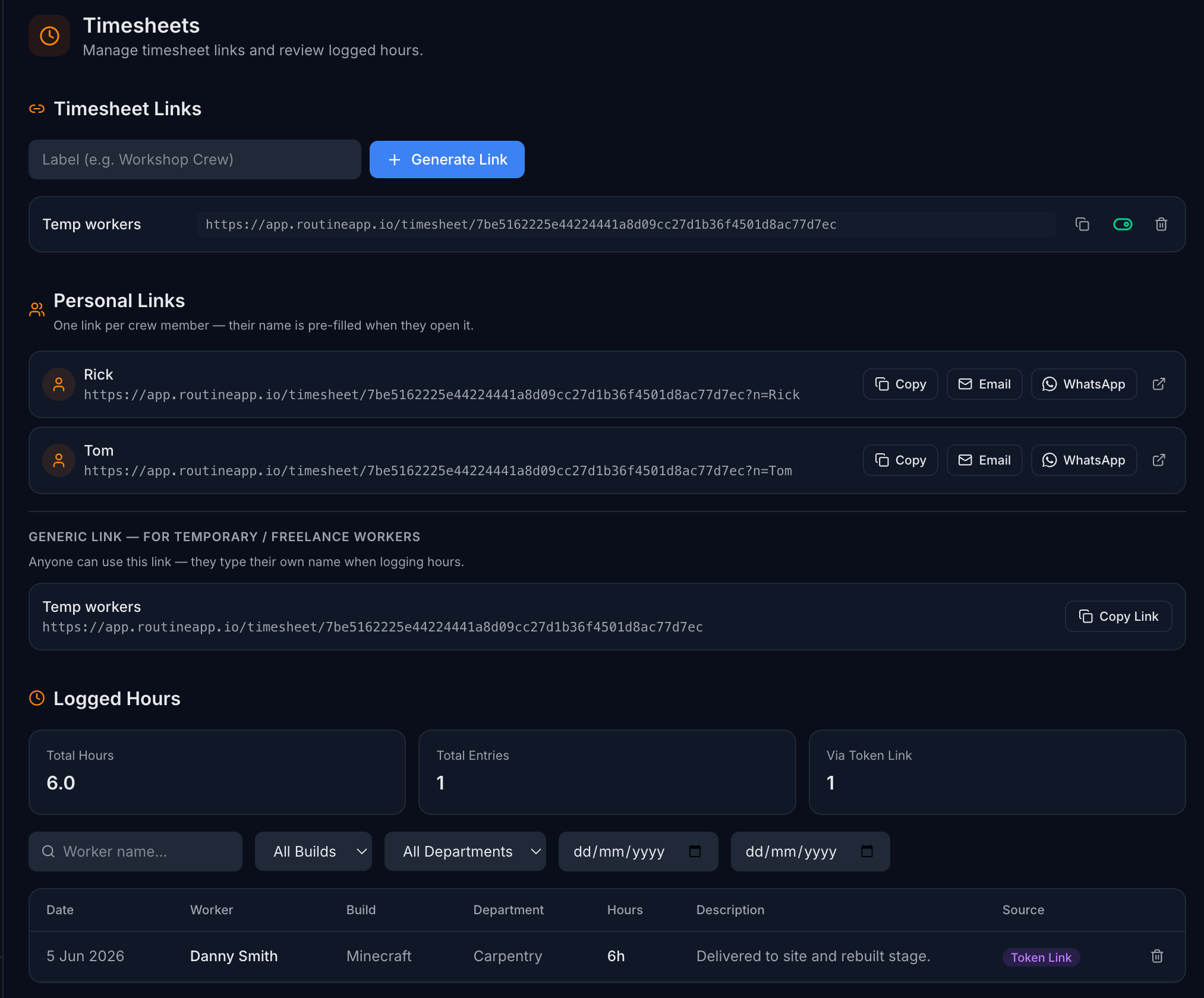
Staff log hours from their phones via a shareable link — no accounts needed. Personal links pre-fill their name; a generic link handles temps.
Schedule deliveries, collections, installs, and strikes with structured addresses, vehicle details, and transport company assignments.
Create reusable templates with predefined phases and tasks. Apply one when starting a new build and the entire workflow scaffolds instantly.
Each build project breaks down into phases by department — carpentry, metalwork, paint, scenic art, transport, install. Set start and end dates, assign team members, and watch the Gantt timeline update in real time.
Department-coloured phases. Each phase is colour-coded by department so you can scan the Gantt and immediately see which teams are active, overlapping, or bottlenecked.
Inline phase editing. Update dates, assigned crew, and notes directly on the phase card — no separate modal or page needed.
Progress tracking built in. The overall progress bar shows how many phases are complete, in progress, or still pending — at a glance, across the whole build.
Construction companies don't need script breakdowns or shot lists. Routine's Construction module was built from scratch with its own terminology, its own database, and its own workflow — so your team sees exactly the tools they need, and nothing they don't.
Separate from film production. Construction has its own sidebar, its own dashboard, and its own data tables. No film terminology leaking through.
Custom departments. Define your own departments (carpentry, CNC, metalwork, scenic art, etc.), assign colours, and set hourly rates — all configurable in settings.
Saved addresses. Save your workshop, storage unit, or any frequent location once in settings — then pick it with one click on every transport booking instead of re-typing it.
Track every material across every build — timber, sheet material, metal, fixings, paint, foam, resin, and more. Log quantities, unit costs, and suppliers, then cycle status from needed to ordered to delivered as materials arrive.
Supplier company picker. Link materials to supplier companies from your shared directory — or add a new supplier inline without leaving the form.
Cross-build overview. The Materials page shows orders across all builds. Filter by status, category, or search by name — see everything that's outstanding in one table.
Cost tracking automatic. Unit cost times quantity calculates the total automatically. Budget vs actual is always visible on the build overview.
Generate a shareable timesheet link and send it to your workshop crew via email or WhatsApp. They log hours, department, and a description from their phone — no account, no app download, no training required. Entries appear in your admin view immediately.
Each worker gets their own link with their name pre-filled. Send it via Email or WhatsApp directly from the admin page.
Freelancers and temporary workers use a single generic link and type their own name. No setup needed for short-term crew.
Set default hourly rates per department in settings. Labour costs calculate automatically based on hours logged and department rates.
Everything you'd expect from a dedicated hire and inventory platform — a reusable stock catalogue, live availability, quotes, invoices, barcode checkout, and purchase orders — now built into the same module that runs your builds. No second system, no re-keying.
Build a persistent catalogue of consumables and owned kit — quantity on hand, reorder points, costs, and location. Materials pull from the catalogue instead of being re-typed on every build.
See what's committed and what's free before you promise it. Demand across every open build gives an instant available-or-short signal, so you never double-book your own stock.
Build line-item quotes with VAT and live totals, prefilled from the catalogue. Send a link, the client signs online, and an accepted quote converts straight into an invoice.
Raise full, deposit, or balance invoices from a quote or a build — with VAT and sequential numbering — and watch live margin against your logged costs.
Track serialised tools and kit — who has the drill, on which build, due back when. Generate barcode labels and scan items in and out straight from a phone camera.
Turn shortages into draft purchase orders grouped by supplier in one click. Receive a PO and its quantities flow straight back into stock on hand.
Upload a drawing and get a structured materials take-off — quantities, sheet goods, timber lengths — ready to price against your stock catalogue.
Generate a phased build plan from the brief — phases, dependencies and durations you then adjust — instead of starting every programme from a blank page.
Draft method statements and safety documentation from the build’s own data, ready for review — paperwork that starts 80% done.
Inventory platforms treat everything as a rental line item. Routine knows a set is part of a production — built by a department, tied to a schedule, and reusable next season. That's the difference between tracking work and planning it.
Reusable Set Library. Snapshot a finished build — its phases, materials, and documents — into a reusable set a future production can clone in seconds. Stock systems can't model this, because sets aren't rental SKUs.
AI Build Planner. Describe a set — "a Victorian living room" — and Routine drafts the phases, materials, crew, and risks, ready to become a real build in one click, with materials auto-linked to your stock.
Dependency-aware readiness. Link phases so paint waits on walls and install waits on transport. Routine flags the conflicts, projects your finish date against the deadline, and tells you at a glance whether a build is on track or at risk.
Full set lifecycle. Follow a set from design and approval through build, dress, filming, hold, and strike, into storage or reuse — richer than any stock-in, stock-out status.
Most workshops end up with a hire and inventory tool on one side and their production paperwork on the other, and lose half the week reconciling the two. Routine collapses that into a single record — the build you're making, the stock it consumes, the crew building it, the quote you sent, and the invoice you'll raise are all the same data.
No reconciliation. Stock, labour, and costs all attach to the build, so budget vs actual and live margin update themselves.
No re-keying. A catalogue item priced once feeds materials, quotes, and purchase orders alike.
Built for film & TV. Link any build to the production it's for, so the art department and the shooting schedule speak the same language.
Tell us about your workshop and we'll get you set up.