Routine's Theatre module is a purpose-built workspace for live theatre companies — scenes, cast & crew, prop breakdowns, cue sheets, costumes, rehearsal calendars, the performance run, and the budget, all connected around one show.
Nine connected tabs replace the pile of spreadsheets, call sheets, and prop lists that a stage management team juggles by hand.
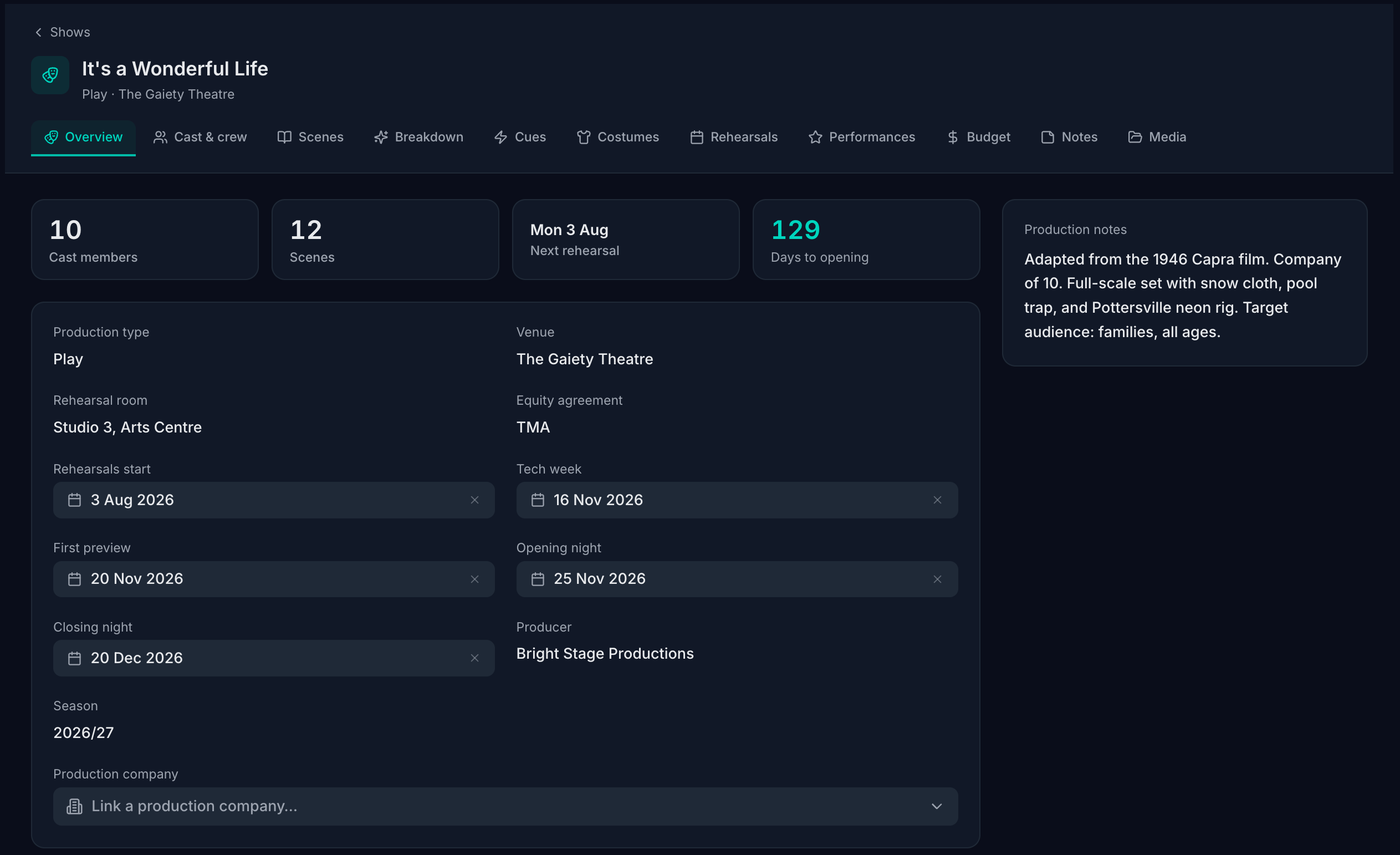
Venue, rehearsal room, equity agreement, producer, key dates, and production notes — the whole show at a glance, with days-to-opening counting down.
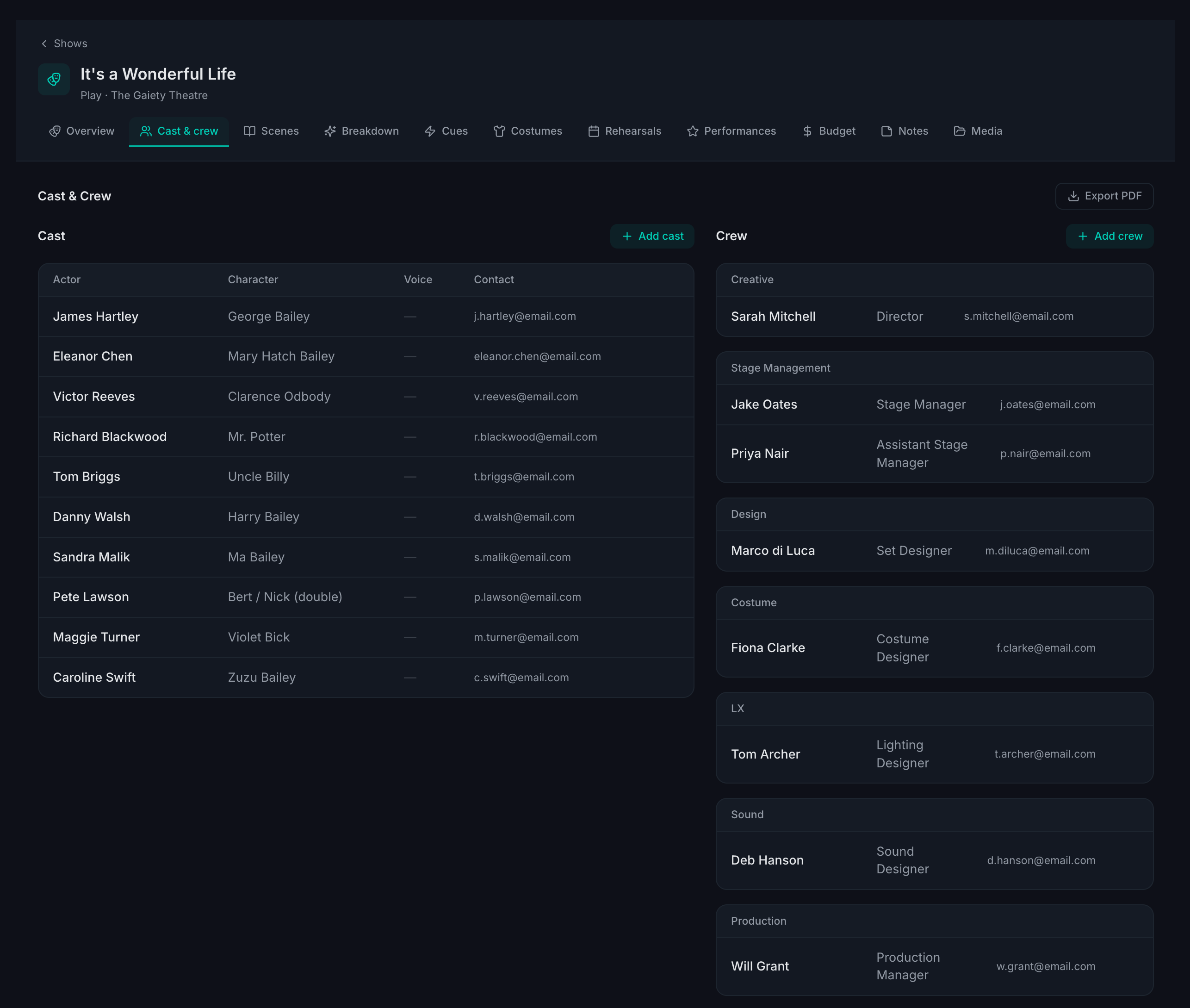
Cast table with understudy tracking, and crew grouped by department — Direction, Stage Management, Design, LX, Sound, Costume, Production. Export to PDF.
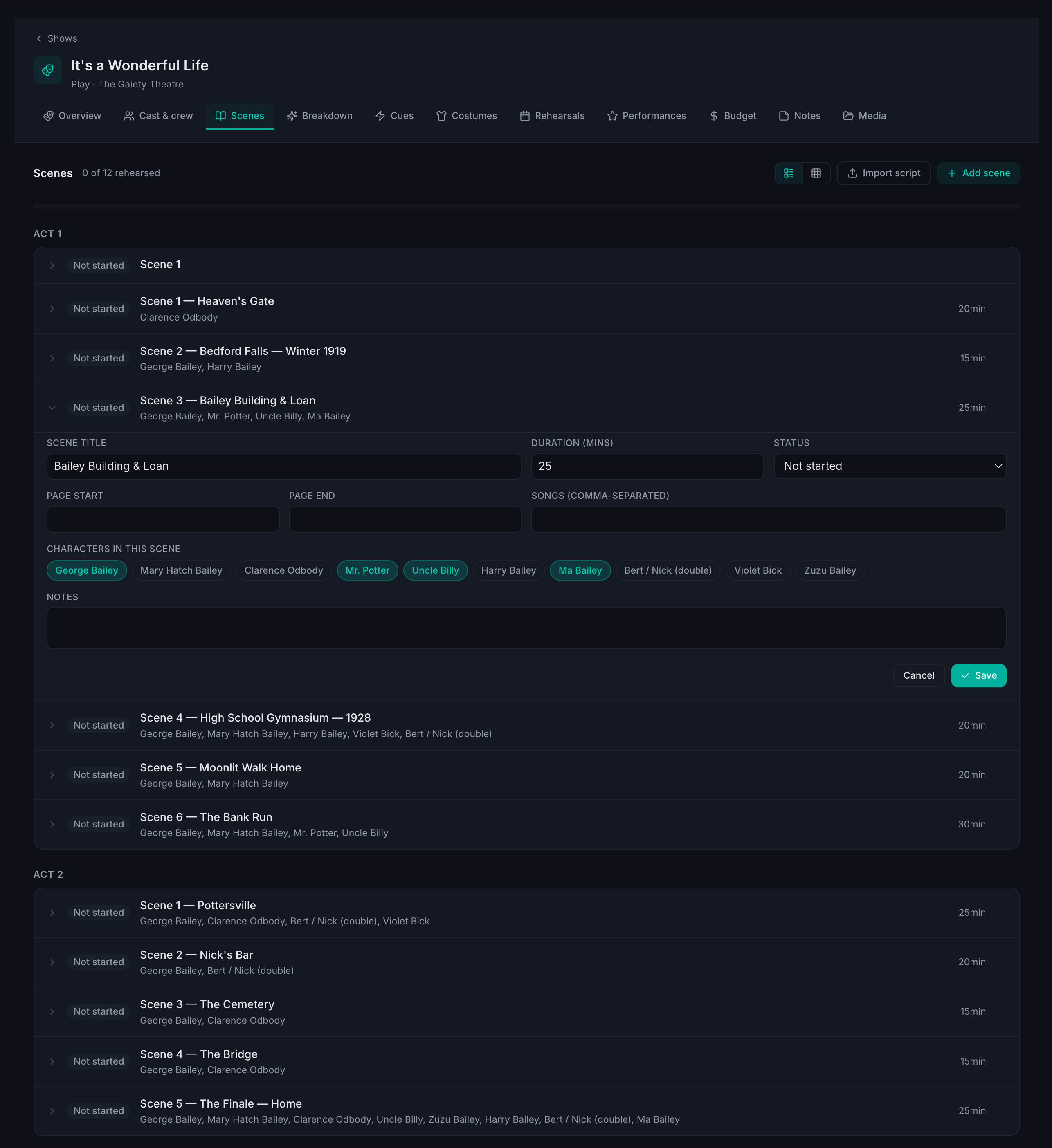
Break the show into acts and scenes, assign characters to each, track rehearsed status, log durations and page ranges — or import straight from the script.
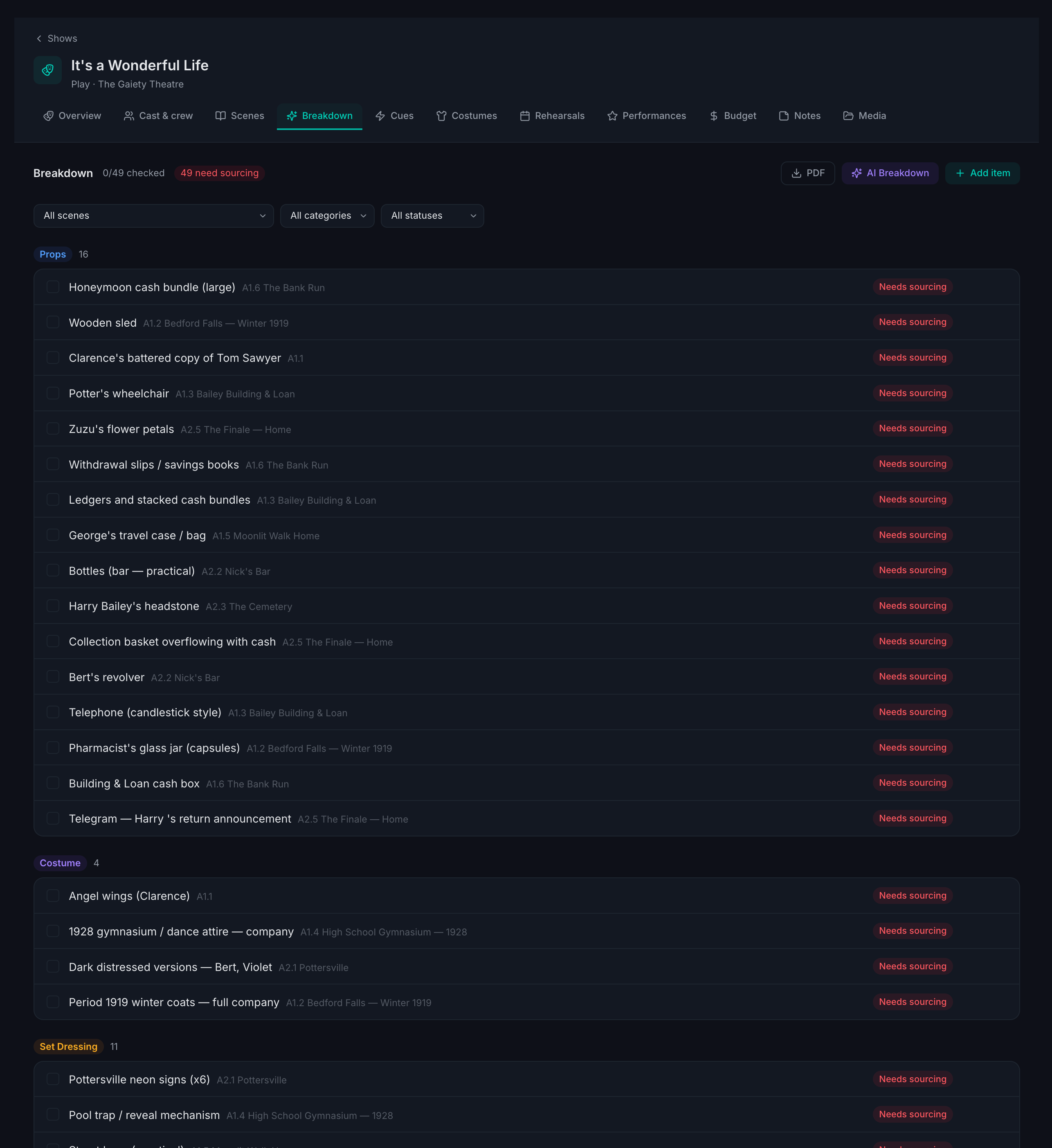
Props, costume, and set dressing pulled per scene with a "needs sourcing" status — generate the whole list automatically with AI Breakdown.
Lighting, sound, and stage cues with trigger and scene; garment tracking per cast member with fitting dates, laundry, and quick-change timings.
A rehearsal calendar with time-blocked sessions, per-actor availability, call confirmations, and shareable printable call sheets.
Schedule the whole run by month with type badges — preview, regular, matinee, press night, gala, schools, relaxed — plus per-show reports.
Budgeted vs actual across creative fees, venue, production, marketing, royalties, and technical — with live category breakdown and CSV/PDF export.
Keep production notes and reference media attached to the show, so the whole company works from a single source of truth.
Every show is a live production record — venue, rehearsal room, equity agreement, producer, and every key date from rehearsals start to closing night. The header keeps the numbers that matter front and centre: cast size, scene count, next rehearsal, and days to opening.
Inline-editable everywhere. Click any field — dates, venue, notes — and edit in place. No separate settings screen to hunt through.
Days-to-opening countdown. The whole team sees the same clock, so tech week never sneaks up on anyone.
Linked to the job. The show record connects to companies, tasks, and messages — so production admin lives alongside the creative work.
Structure the show into acts and scenes, then assign the characters in each. Track how much of the show is rehearsed, set durations and page ranges, and add scene notes — or import the whole structure from your script in one step.
Character assignment per scene. Tap characters on and off a scene; the same cast list drives breakdowns, cues, and call sheets.
Rehearsed-status tracking. Cycle each scene through not started, in progress, rehearsed, and confirmed — with a progress bar across the whole show.
Import from script. Bring the act/scene structure in automatically instead of typing it out by hand.
Routine reads your scenes and builds the breakdown: props, costume, and set dressing, each tied to the scene it appears in and flagged for sourcing. Hit AI Breakdown to populate the whole list in seconds, then tick items off as you source them and export the sheet to PDF.
Turn a script into a categorised item list automatically — props, costume, set dressing — each linked to its scene.
Every item shows whether it still needs sourcing. Filter by scene, category, or status to see exactly what's outstanding.
Hand the props table or costume plot to a maker or supplier as a clean PDF, straight from the breakdown.
Build the cue stack and the costume plot with the same fields your DSM and wardrobe supervisor already use — nothing generic, nothing bolted on.
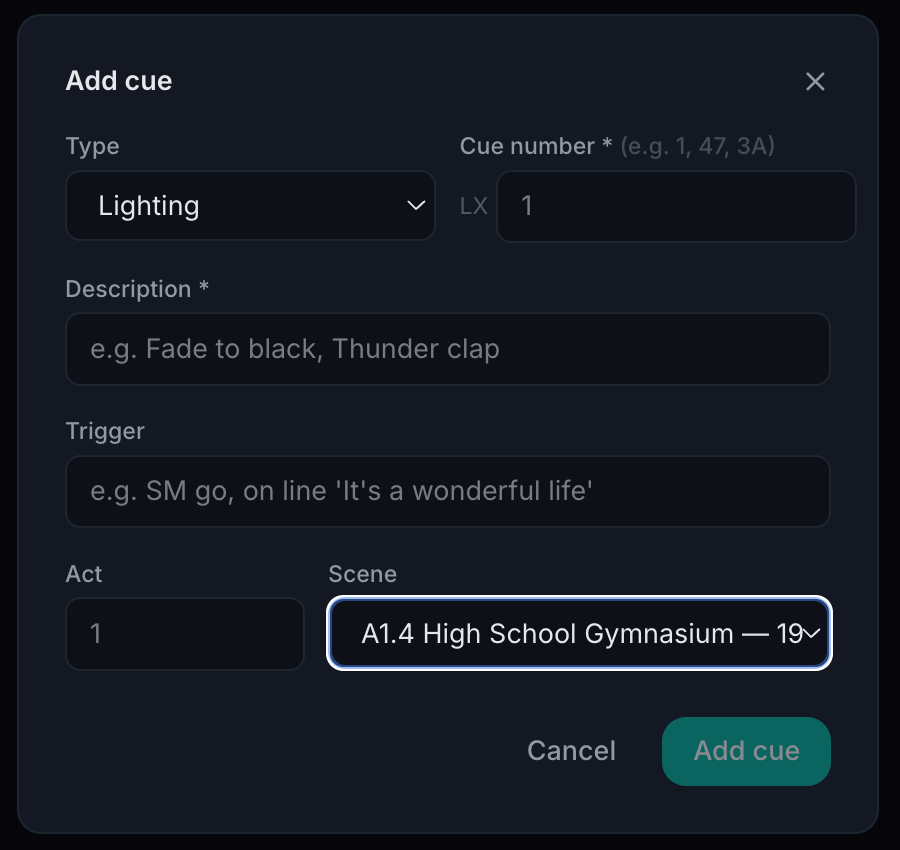
Add cues by type with a cue number, description, and the exact trigger — "SM go, on line 'It's a wonderful life'" — pinned to an act and scene. The result is a running cue sheet the whole team reads the same way.
Typed and prefixed. Lighting cues read LX, sound cues read their own prefix — clear on the page and on the cans.
Scene-anchored. Every cue ties to a scene, so a rewrite or re-order keeps the cue stack in context.
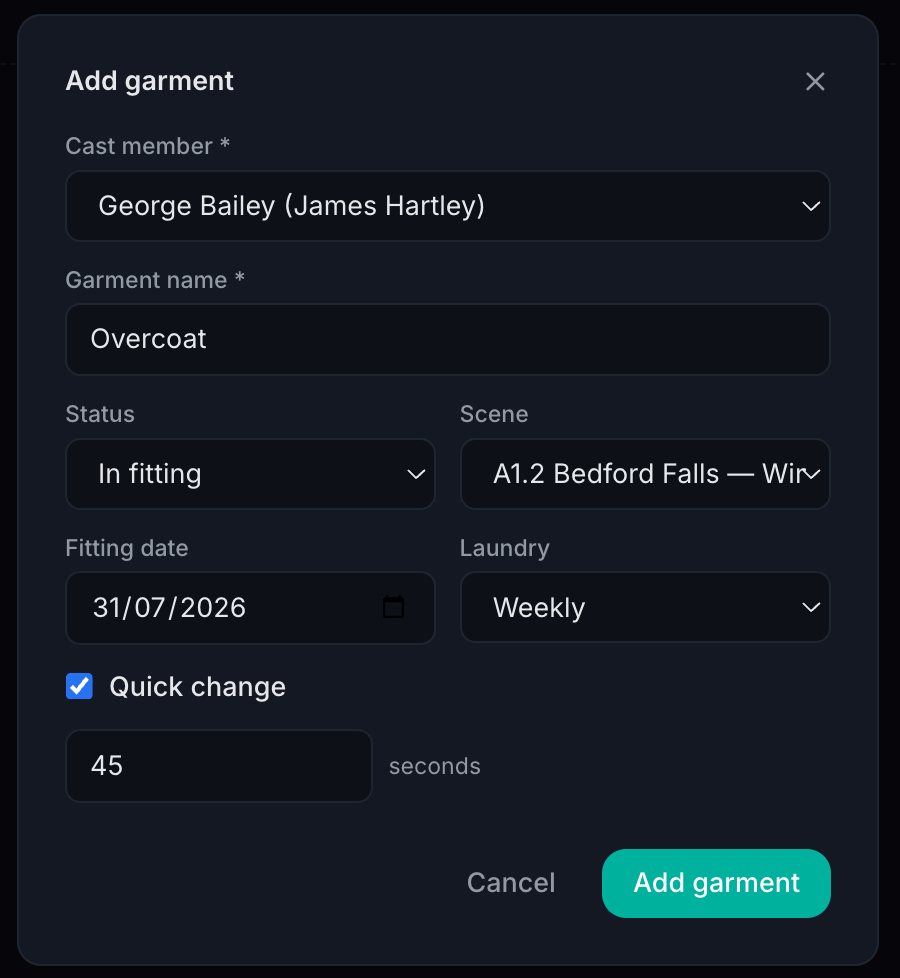
Log every garment against a cast member and scene, with fitting dates, a laundry schedule, and a status from in fitting to ready. Flag quick changes and record the seconds available, so wardrobe and stage management plan the wings together.
Quick-change timings. Mark the change and log how many seconds there are — the number that decides whether it's a dresser job.
Fittings & laundry. Keep fitting dates and laundry cadence on the garment, not in someone's notebook.
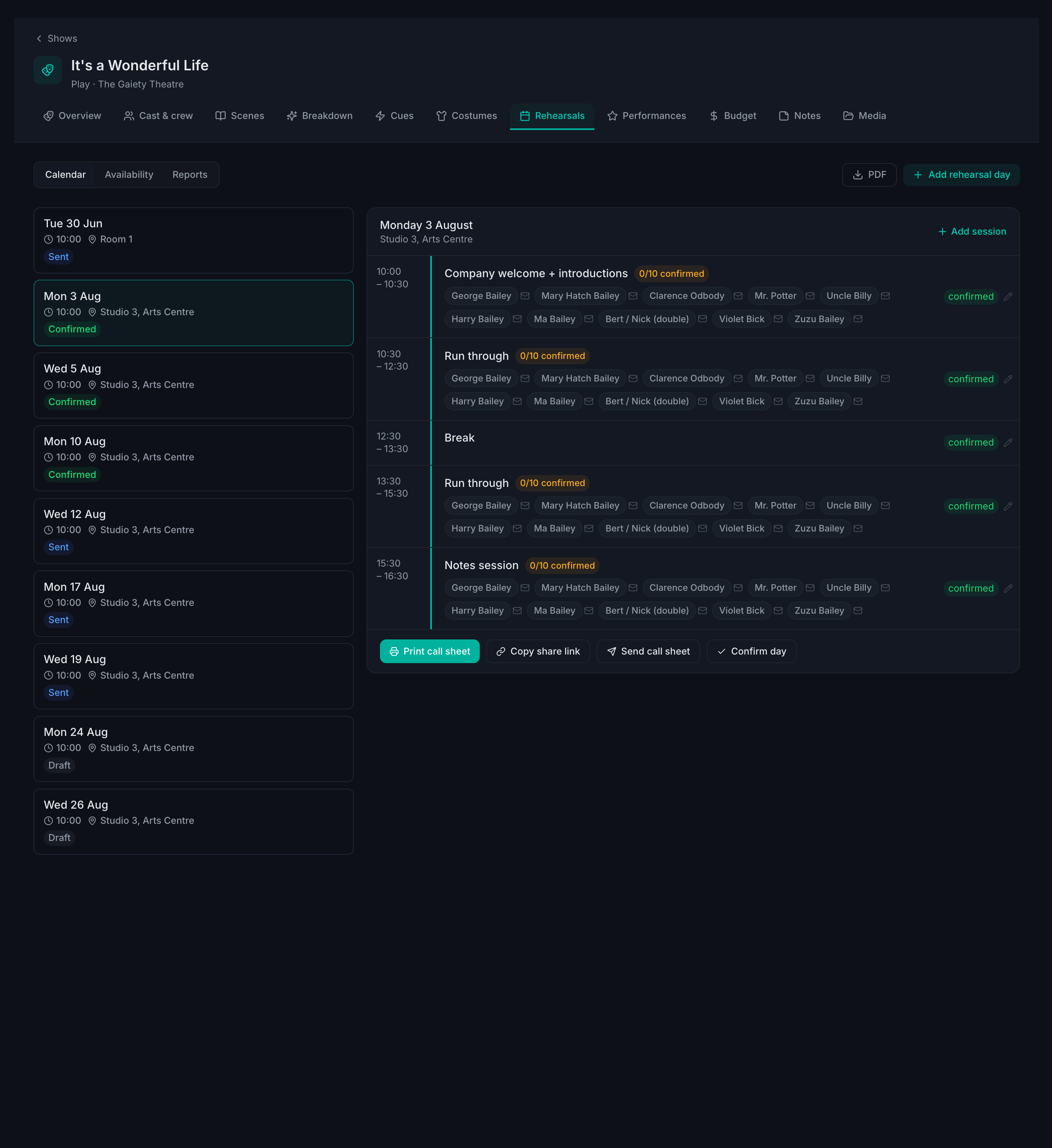
Build each rehearsal day out of time-blocked sessions — company welcome, run-throughs, breaks, notes — with the cast called for each. Track who's confirmed, then print, share, or send the call sheet in a couple of clicks.
Session-level calls. Call the right people to the right block, not the whole company to the whole day.
Confirmation tracking. See "0/10 confirmed" turn green as replies come in, per session and per day.
Call sheets out fast. Print a call sheet, copy a share link, or email the day — with per-actor availability behind the scenes.
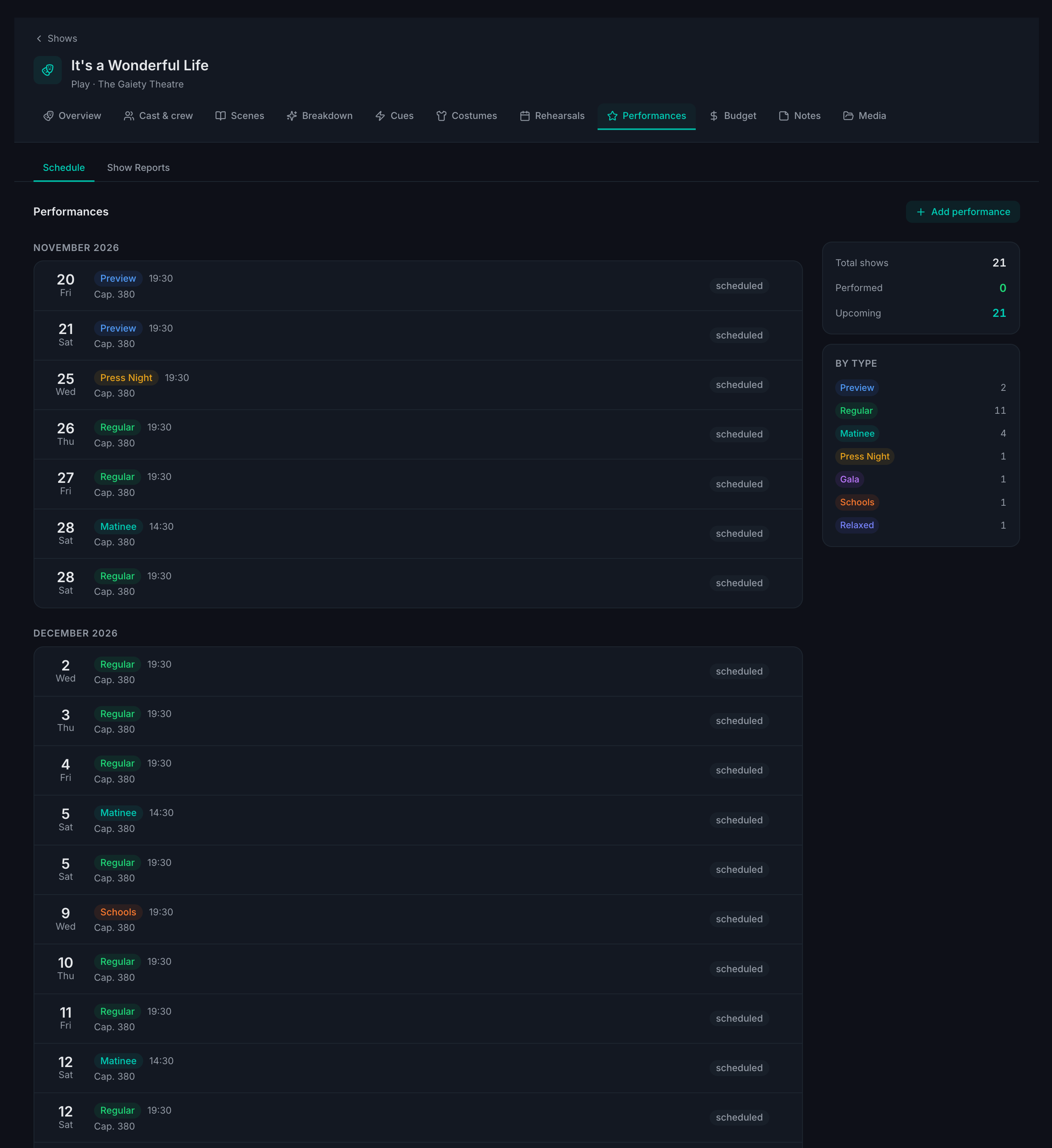
Schedule every performance across the run, grouped by month, with the type badges a box office actually uses — preview, regular, matinee, press night, gala, schools, relaxed. The sidebar tallies totals by type and tracks performed vs upcoming.
Performance types that matter. Press nights, gala, schools, and relaxed shows are first-class — not a note in a spreadsheet.
Run at a glance. Total shows, performed, and upcoming update live as the run progresses.
Show reports. Capture per-performance reports alongside the schedule.
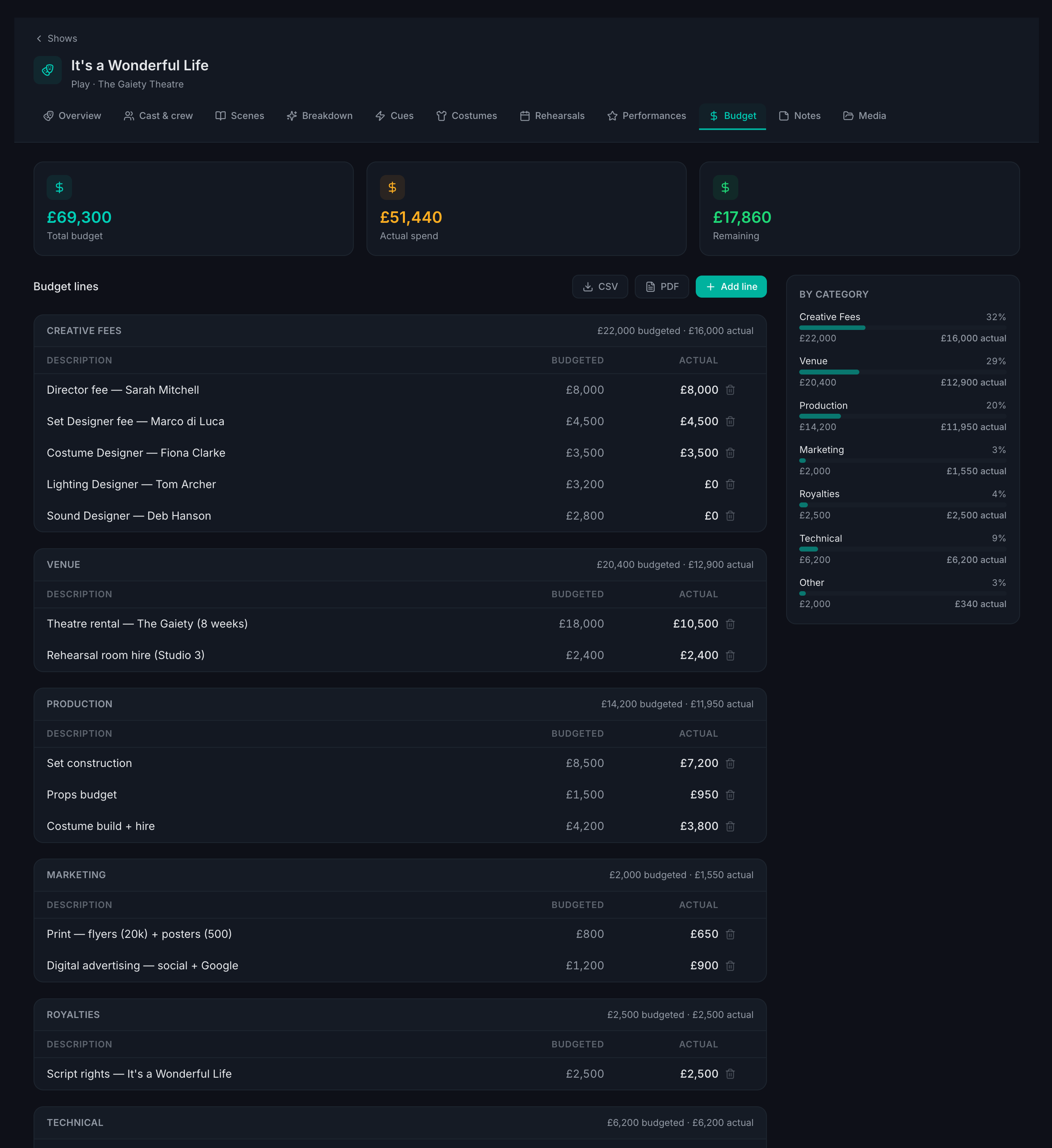
Track the whole production budget by category — creative fees, venue, production, marketing, royalties, technical — with budgeted and actual side by side, a live category breakdown, and CSV or PDF export for the producer.
Keep the acting company and the production team in one place. Cast rows carry character, understudy cover, and contact; crew are grouped by department — Creative, Stage Management, Design, Costume, LX, Sound, Production — with roles and contacts. Export the whole contact sheet to PDF.
Understudy tracking. Record cover on the cast, and track who goes on per performance when it counts.
Department grouping. Crew organised the way a programme reads — by department, with roles and contacts.
One-click contact sheet. Export cast and crew to PDF for the green room noticeboard.
Tell us about your venue or company and we'll get you set up.