Every film starts as a project nobody has paid for yet. Routine's Development module runs the slate from first draft to greenlight — the screenplay and what it costs to shoot, the notes rounds, the casting, the finance plan and waterfall, the funding pack, and a private deal room per project — and hands the result to Production without re-keying a thing.
Everything an investor needs to say yes — organised, gated and controlled by you — and everything Production needs on day one.
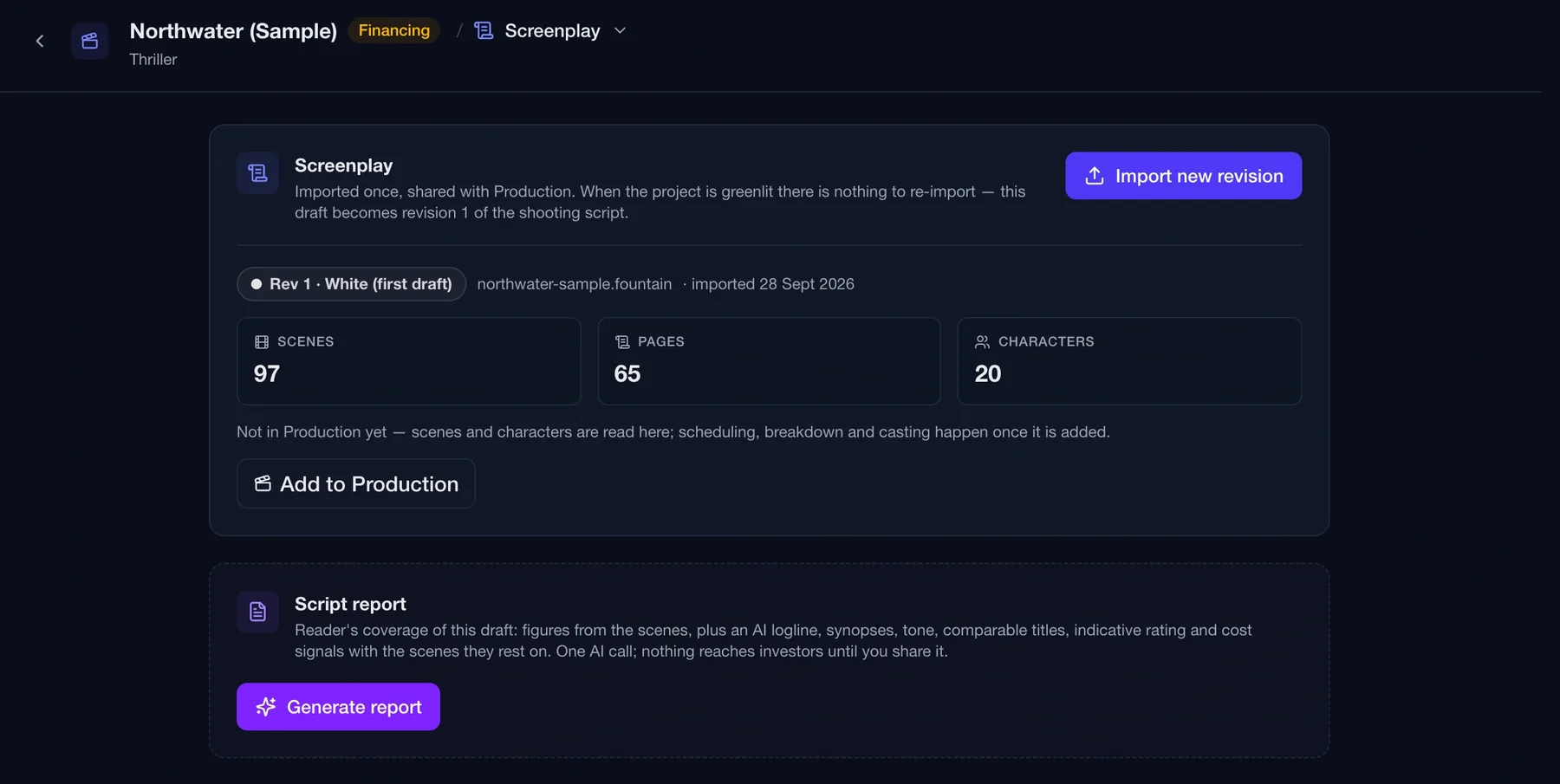
Final Draft, Fountain or PDF. Scenes and characters are parsed on import, each draft is a revision, and the draft you greenlight becomes Production's shooting script.
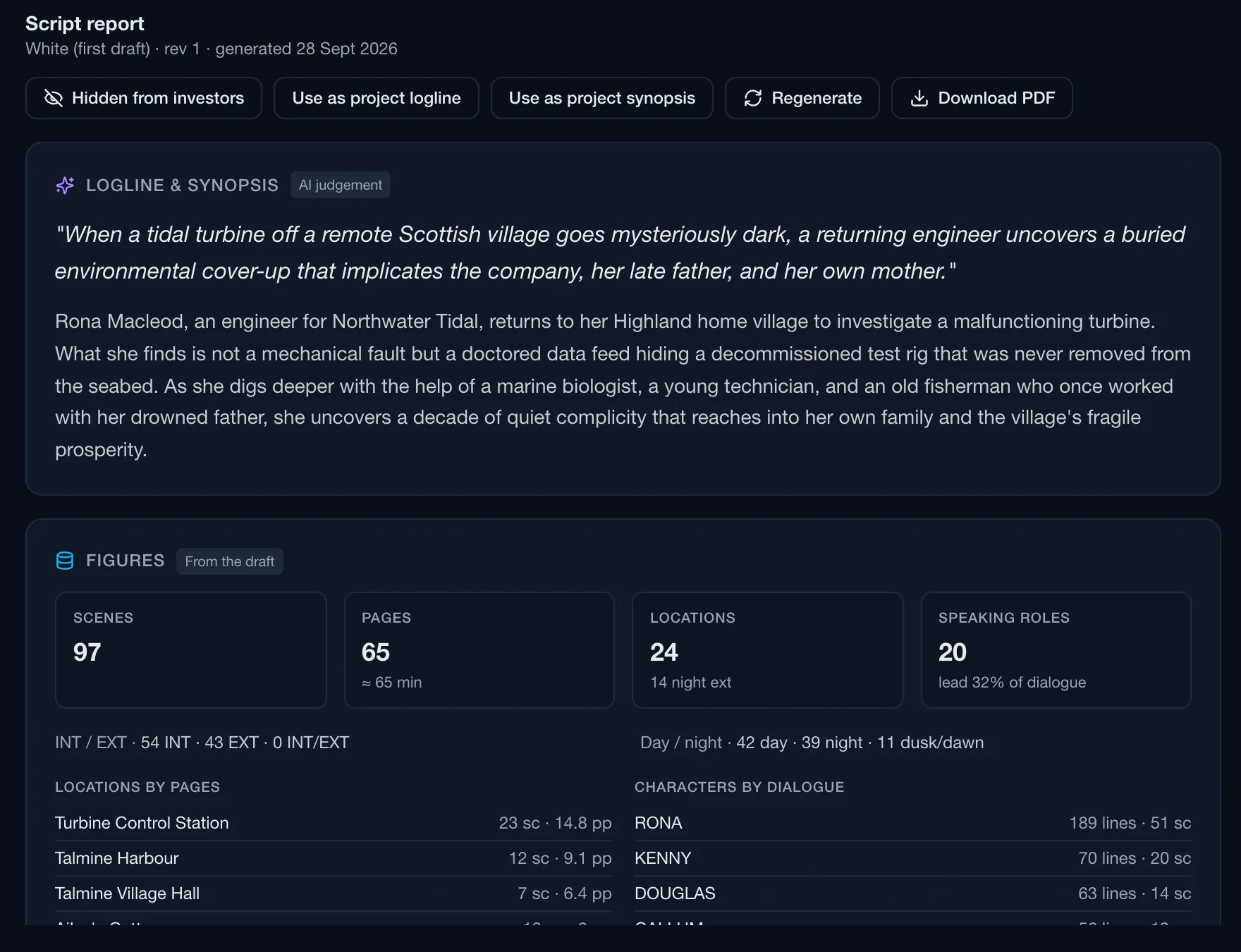
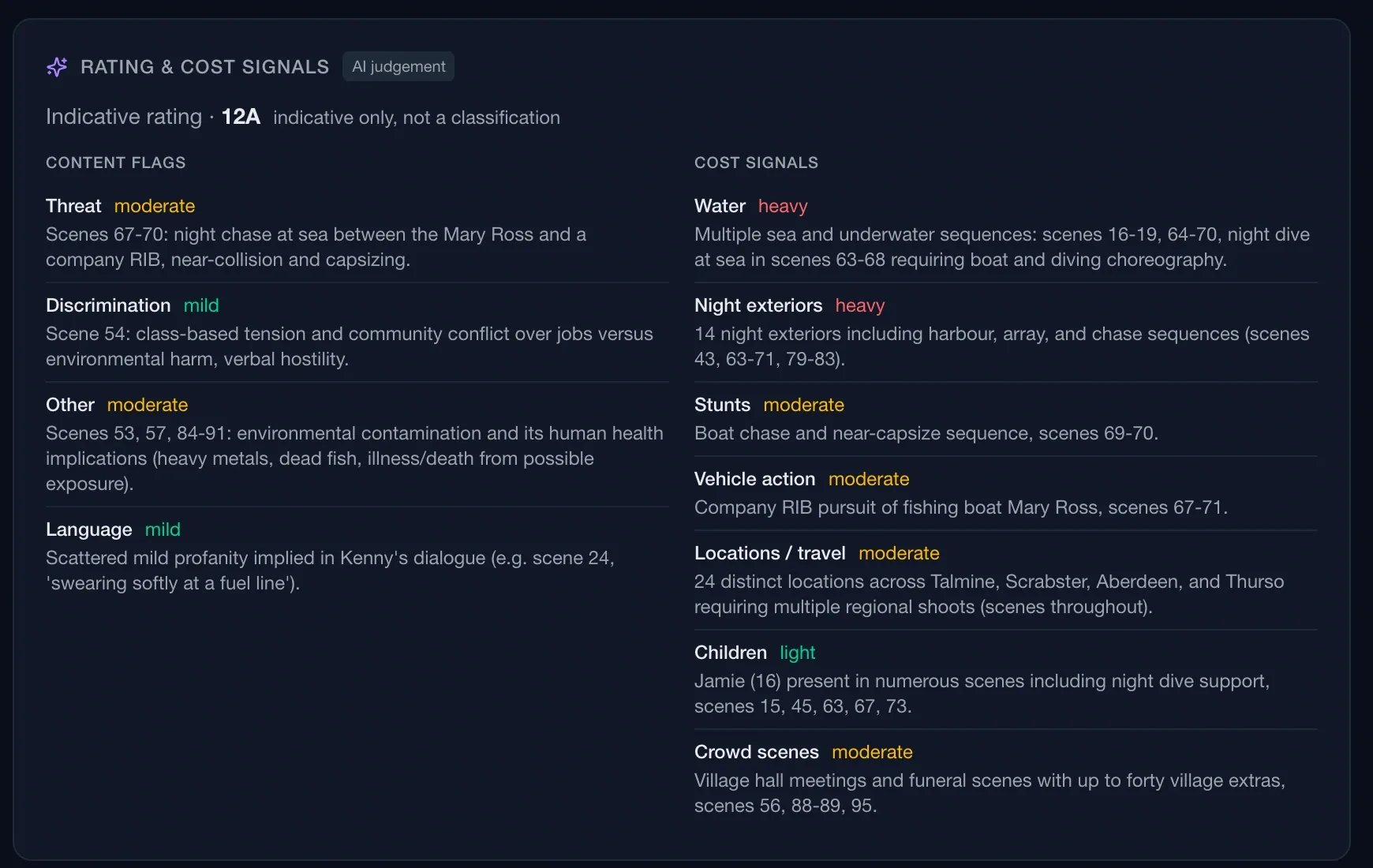
A script report on every draft: logline, synopsis, figures from the script itself, and rating and cost signals that name the scenes they rest on. The AI's judgement is labelled as such.
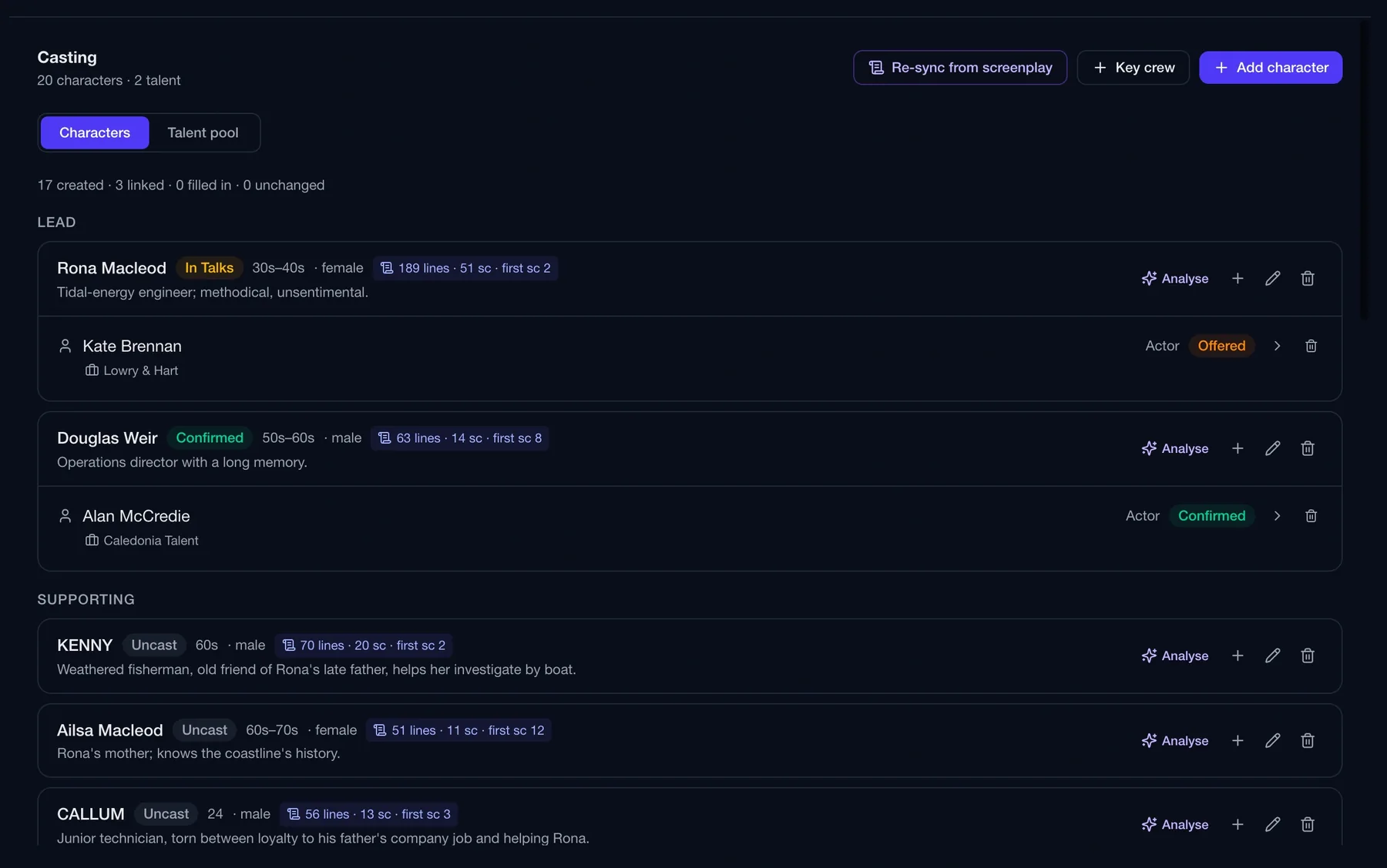
Every speaking role with its lines and scenes counted, matched to the roles and talent already attached — lead, supporting, confirmed, offered, uncast.
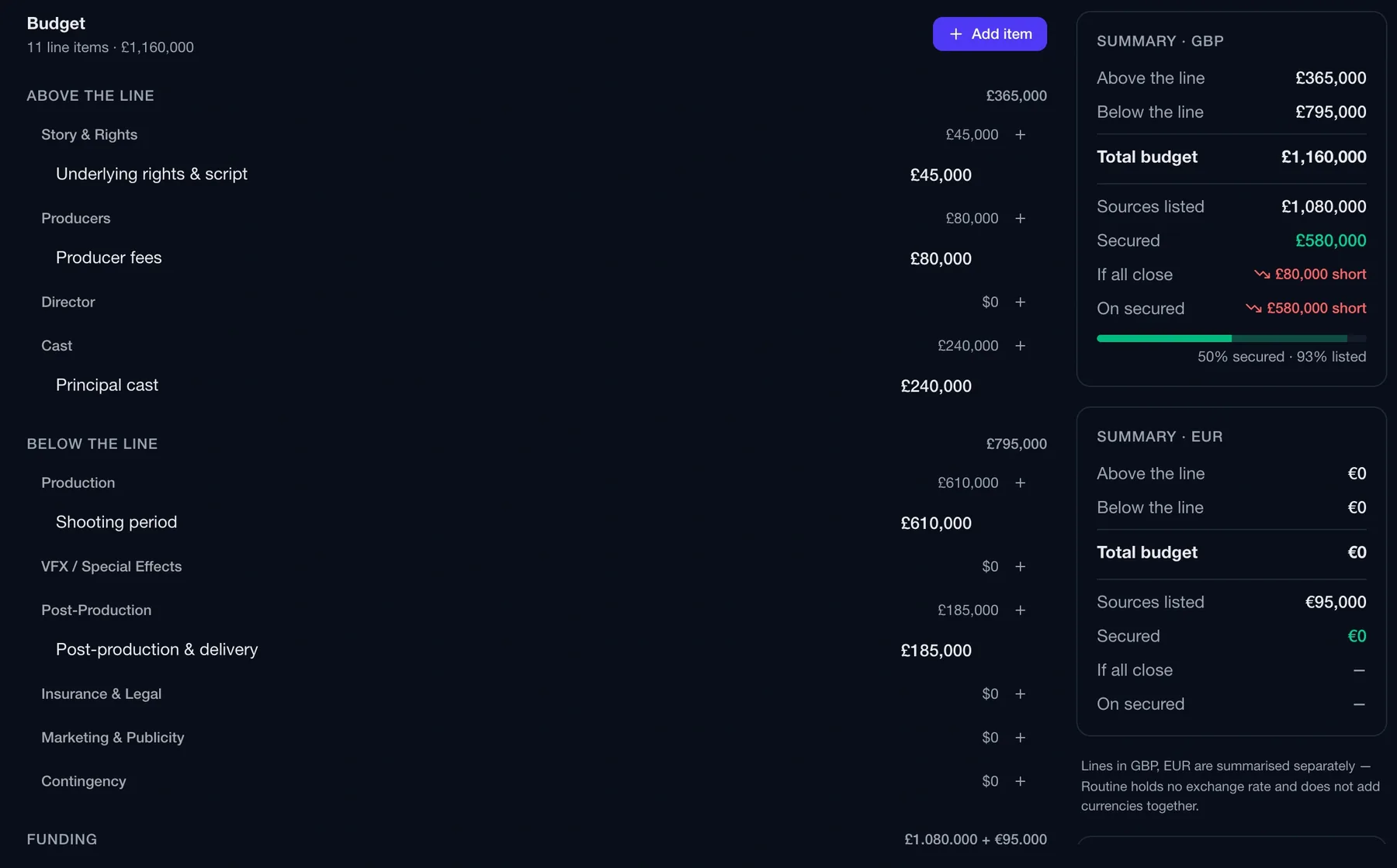
Above- and below-the-line, sources secured against listed per currency, a commercial assessment of what the script costs to shoot and has to earn, and a recoupment waterfall run at low, mid and high receipts.
Application pack, finance plan and co-production split sheet as PDFs, drawn from what's already entered, with a readiness check of what's still missing.
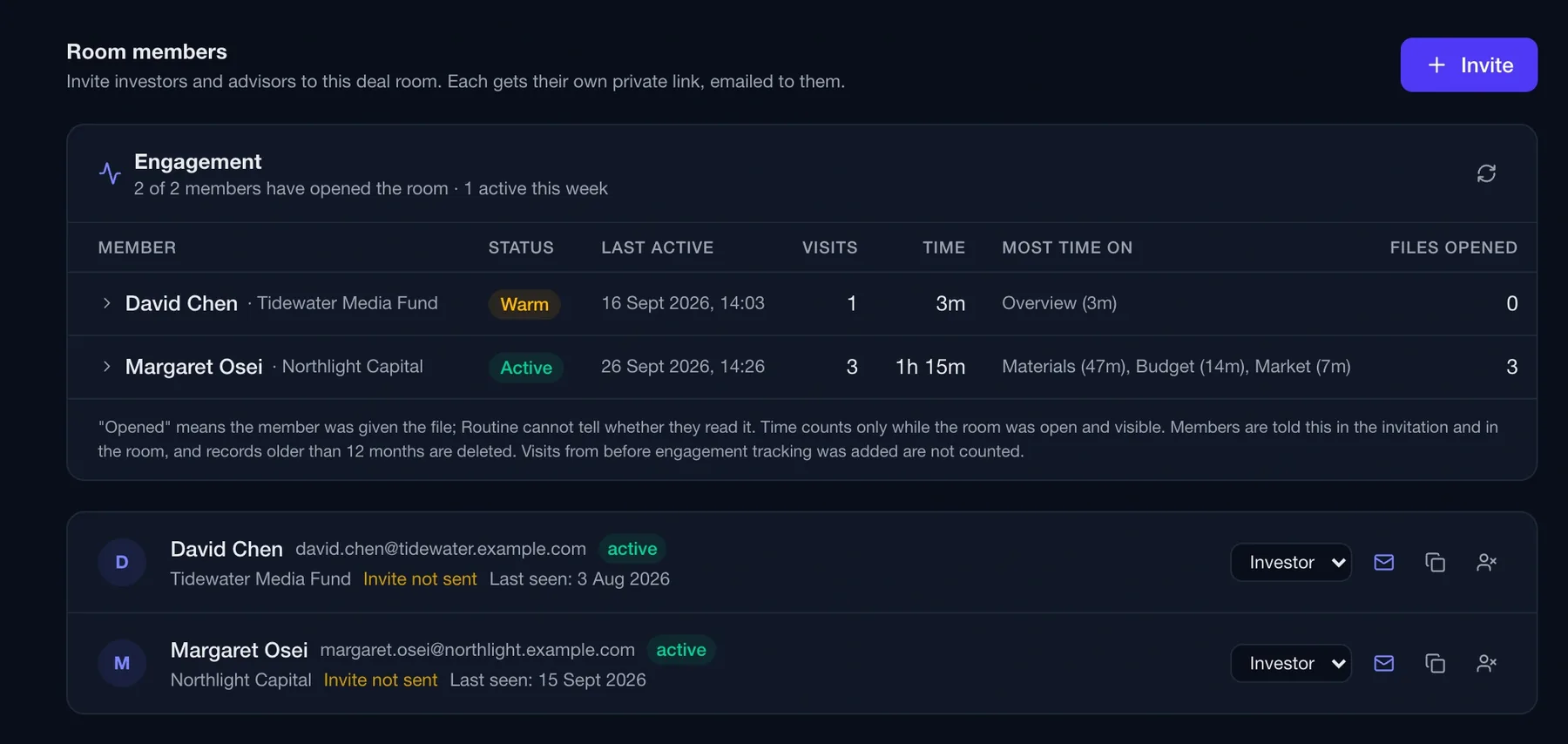
One room per project. Each investor gets their own link — no Routine account — and you see who opened the room and what they looked at. Server-side gating decides what each one sees.
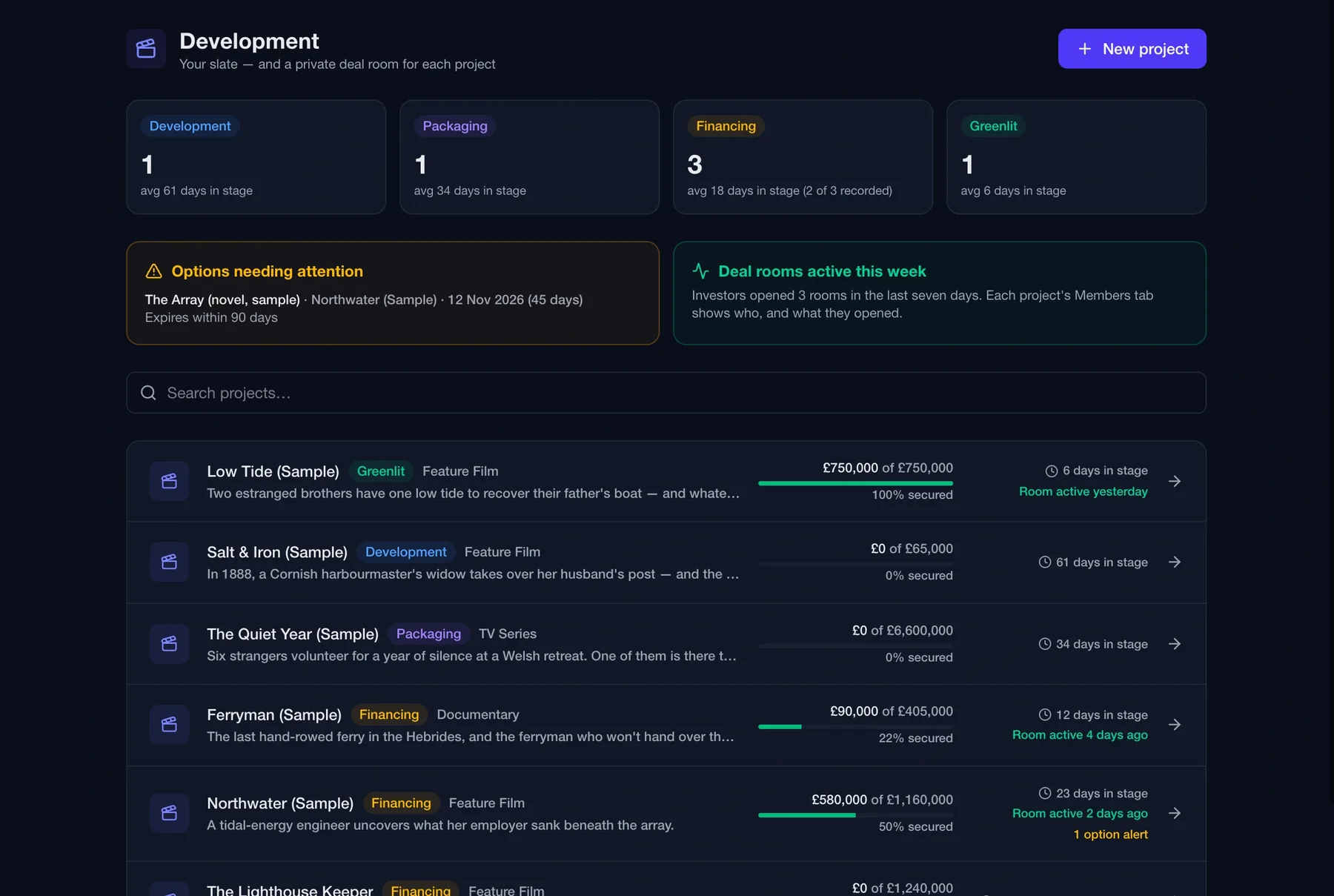
Development, packaging, financing, greenlit: how long each project has sat in its stage, how much of its budget is secured, which options are about to lapse, and which investors opened their deal room this week.
Scenes and characters are read on import — 97 scenes, 65 pages, 20 characters, from the file itself. Each new draft is a revision of the same screenplay, and when the project is greenlit there is nothing to re-import: this draft becomes revision one of Production's shooting script.
Final Draft, Fountain or PDF. The parser reads sluglines, action and dialogue, and page counts come from the script, not from an estimate.
Read-only here, broken down there. Every scene is there to read in Development — who speaks, day or night, how many pages. Scheduling, breakdown and casting happen in Production once the project is added.
Writing Partner on the draft. A pacing review, reactions, loglines and an open conversation that reads the draft on the server. Every quote is checked against the text, and nothing writes to the screenplay.
Logline and synopsis, the figures from the draft, and rating and cost signals with the scenes behind them. Hidden from investors until you share it; usable as the project logline and synopsis in one click.
The figures come from the script itself. Scenes, pages, locations and speaking roles are counted from the draft; locations by pages and characters by dialogue are listed underneath. The AI's judgement is labelled as such.
Cost signals name their scenes. Water, night exteriors, stunts, vehicle action, crowds — every flag lists the scene numbers it rests on, so a producer can check the claim in the script.
Every speaking role is created from the script with its lines, scenes and first appearance counted, then matched to the roles and talent you have already attached. Re-sync after a new draft and only the changes land.
Lead and supporting, confirmed and offered. Attach talent to a role with its agency; the deal room shows investors only confirmed or offered names.
Talent pool. Keep candidates per role alongside the characters, and move one into the role when the offer is accepted.
Analyse a role. A per-character read of the draft — who they are and what they carry — to brief an agent or a casting director.
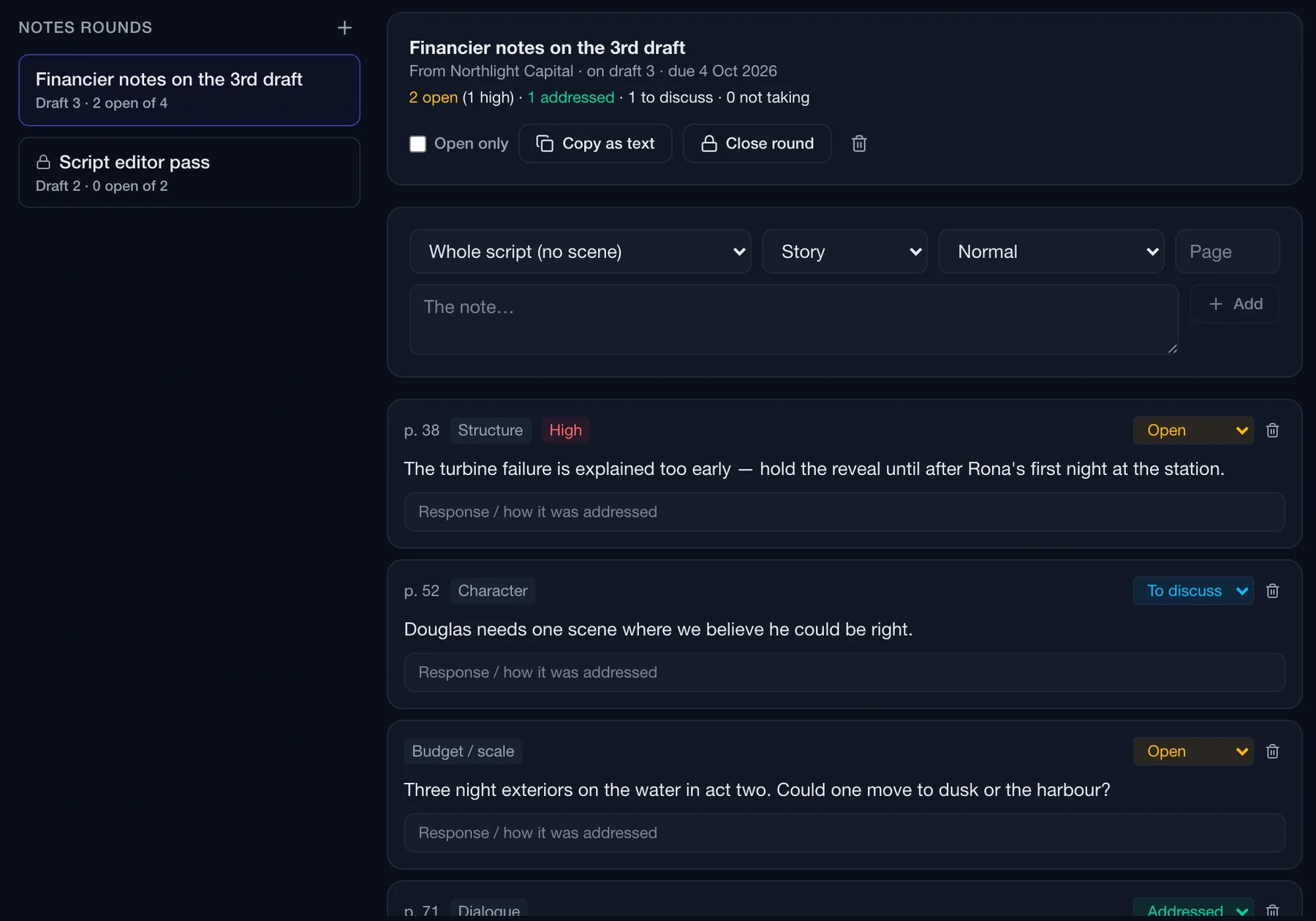
Financier notes on the third draft, a script editor pass on the second — each round keeps its notes together with who gave them, what's still open and how each one was addressed. Open, to discuss, addressed or not taking: the state of a round is visible at a glance.
Notes against the page. Each note carries its page, its kind — structure, character, dialogue, budget — and a priority.
A response per note. Record how the note was addressed in the next draft, so the answer travels with the draft rather than living in an email.
Copy as text, close the round. Send the round to the writer as plain text, and close it when the next draft lands.
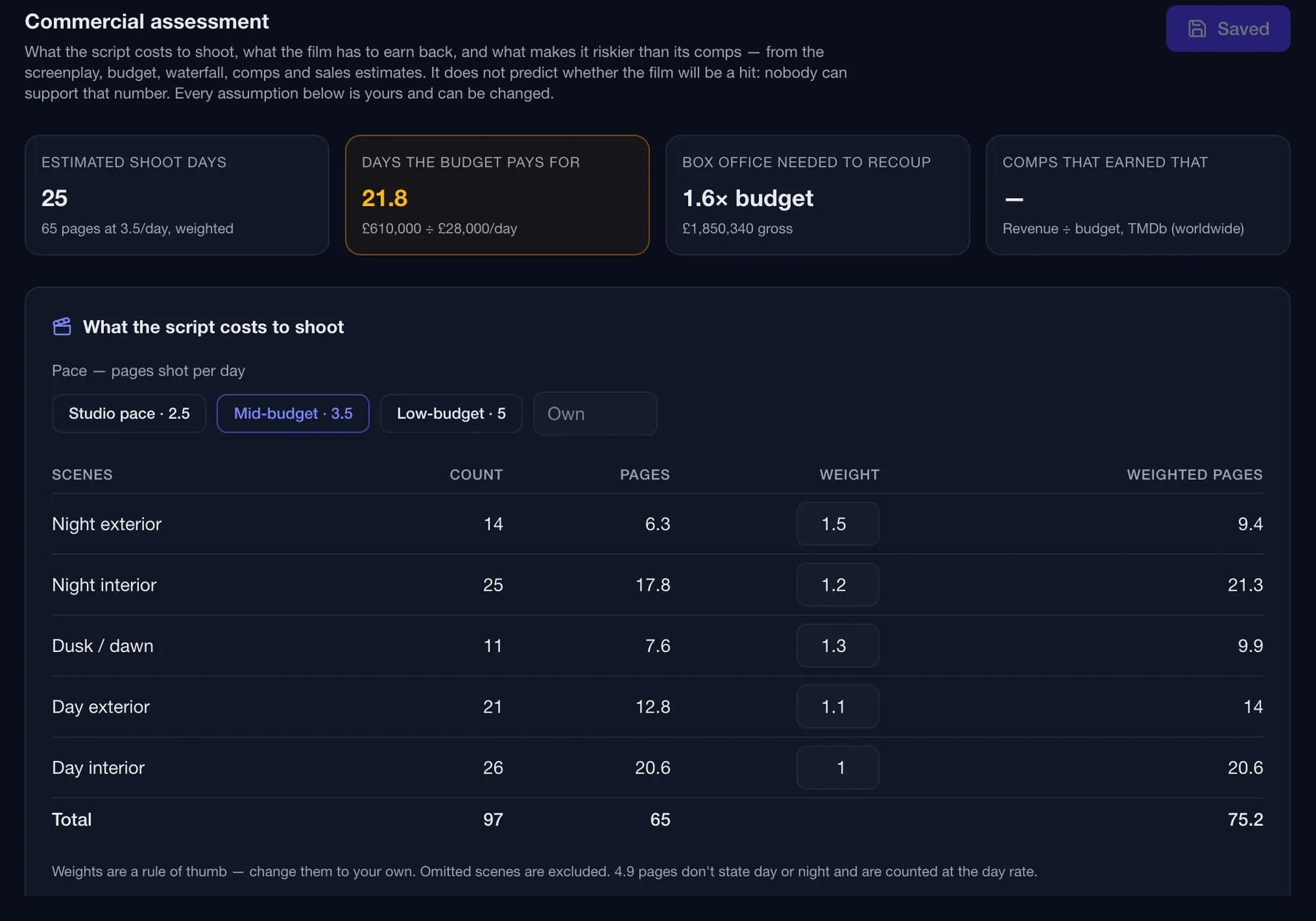
The commercial assessment sets what the script costs to shoot against what the film has to earn back. It does not predict a hit; every assumption is yours to change. The budget shows secured against listed, and every currency is totalled on its own.
Shoot days from the script. Twenty-five weighted days against the 21.8 the budget pays for, at a pace you choose — studio, mid-budget, low-budget or your own. The box office needed to recoup is shown as a multiple of budget.
Secured means secured. Sources are listed with a funder, a status and a territory; the summary shows what is secured, what is short if everything closes, and what is short on secured money alone — in GBP and EUR separately. Routine holds no exchange rate.
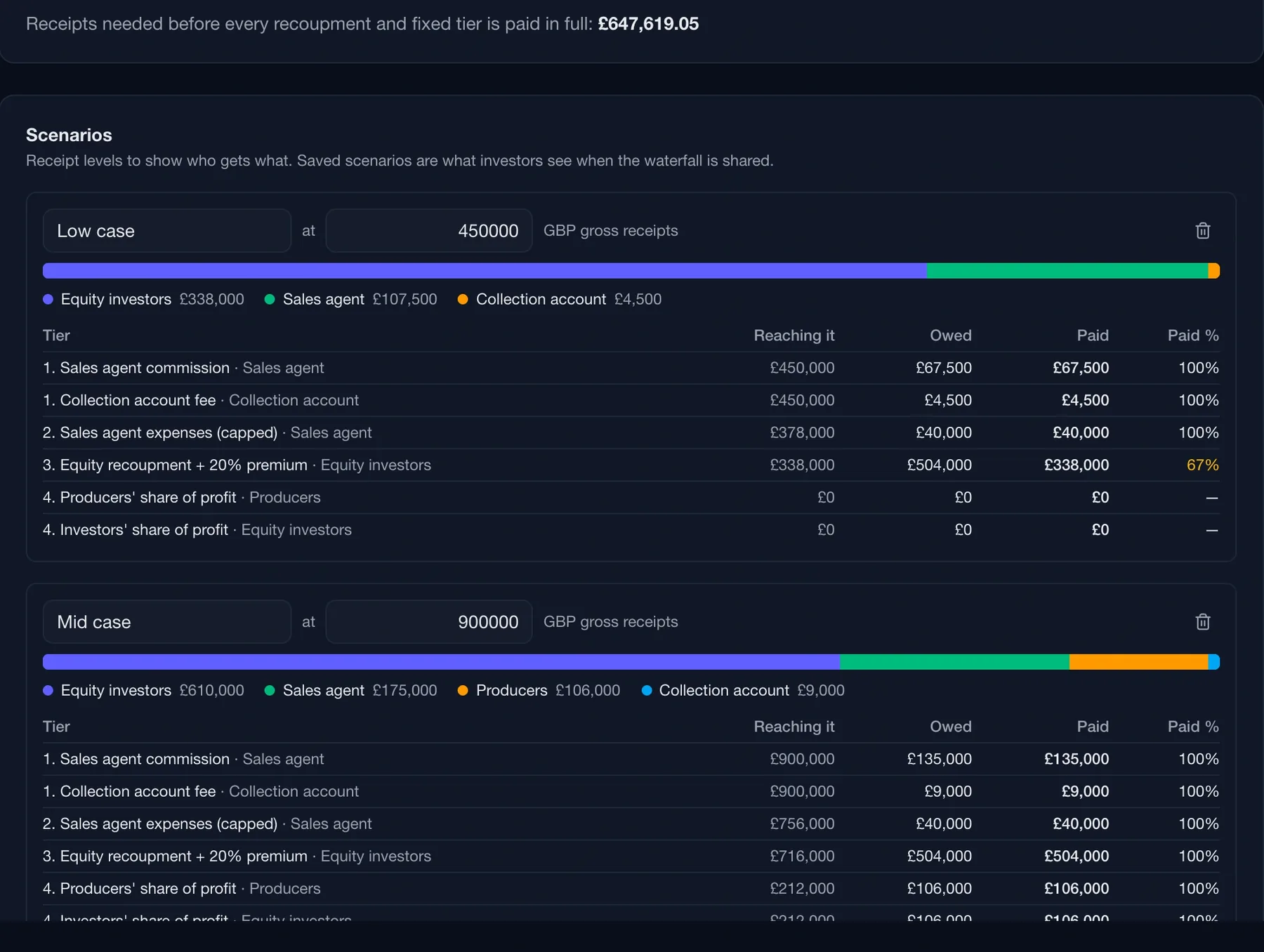
Sales agent commission and fees, collection account costs, equity recoupment with a premium, then the profit split — run at low, mid and high receipts so investors see who gets what at each level. Saved scenarios are what the deal room shows when the waterfall is shared.
Tiers in order, paid in full before the next. Each tier shows what it reaches, what is owed, what is paid and the percentage — the receipts needed to pay every fixed tier is the headline figure.
A funding pack from what's already there. Director's statement, producer's statement, target audience and comparable titles, then the application pack, finance plan and co-production split sheet as PDFs — with a readiness checklist of what is still to write.
Underlying options tracked. The option on the novel, its expiry and its renewal window surface on the slate before they lapse.
Invite investors and advisors by email. Each gets their own private link, no Routine account, and sees only the version of the project you have chosen to show them — casting confirmed or offered only, locations approved only, the budget hidden, as a summary or in full. You see who opened the room, when, for how long and what they spent the most time on.
Every filter is enforced in the database, not the browser. An investor cannot see a hidden budget line by looking harder.
Put scripts, sizzle reels and decks behind an NDA acceptance so nothing opens until the terms are agreed. Files are signed on demand from a private bucket — no permanent public links.
PDFs opened from the room are watermarked for the person who opened them. Engagement analytics show what each investor read, not just that they logged in.
The project you financed becomes the production you make. "Send to Production" carries the screenplay, the cast, the chosen budget lines, the shoot days and the locations into a live production in one call — so the schedule, breakdown and call sheets start from the draft you raised money on.
Nothing re-keyed. The greenlit draft is revision one of the shooting script; the cast list is the roster's starting point.
Market tab, verified. Comparable titles are checked against a public film database with ranges and market signals, and sales estimates own their presale lines.
One platform. Development is the front of the same lifecycle that runs your production, post, distribution, marketing, theatrical release and archive.
Load the sample data and you get a four-project slate — one per stage — with a full sample screenplay imported, its script report, casting, notes rounds, budget, waterfall and a deal room, so every screen on this page is there to click through before you add a project of your own.
Not a marketplace. There is no public listing or discovery — a deal room is private by design, invited-only, and yours.
Honest by default. AI judgement is labelled, figures come from the script, and nothing the model writes reaches an investor until you share it.
Try it free for 14 days — or tell us about your slate and we'll walk you through it.
No card needed.