A tour runs on a day sheet, a set list, a guest list, a tech rider and a settlement. An agency runs on holds, offers, contracts and commission. A venue runs on what each night actually made. Routine's Music module does all three on one record — live on every phone on the bus, and in the office that booked it.
For the tour manager: routed in the office, executed from the bus — the same record, city after city.
Everything about today on one page — times, venue, hotel, bus call, contacts — published as a live link the crew opens on a phone. Change the schedule and every copy updates.
Build the set from the tour's song library, reorder at soundcheck, and share a stage-readable live link — plus a print-ready PDF for the monitor desk.
The comp list per show with ticket counts — and an expiring door link the box office uses to tick guests in from a phone, no account needed.
A drag-and-drop stage plot builder, a proper channel list, and rider sections venues actually read — sent as a live link or a watermarked PDF.
A per-show checklist — rider sent, venue spec back, backline confirmed — so you can see at a glance which of the next five shows aren't ready.
Guarantee, door split, merch and expenses per show — with unpaid shows surfacing automatically in Routine's Finance monitor until the money lands.
The booking is the unit of work for an agency, not the tour. Routine runs the deal from enquiry to commission statement, and a confirmed booking becomes the show day the bus runs on.
Every enquiry, hold, offer and confirmed night in one pipeline, with ranked holds that expire, clash warnings when an act is double-booked or a room is shared, and a month view by act or by room. Confirming releases the holds it beat.
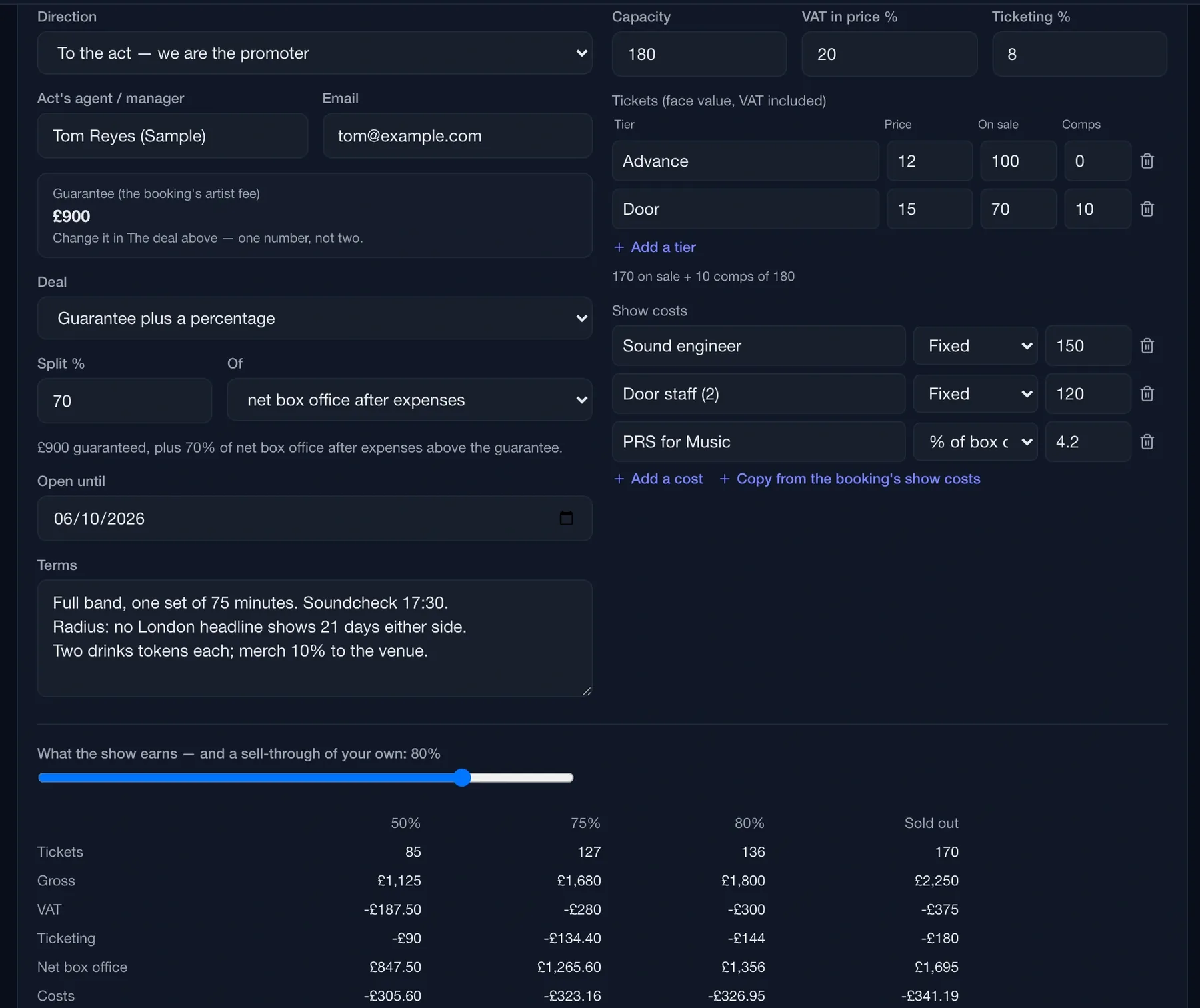
Build the offer to the act — guarantee, versus or door deal, ticket tiers, show costs, break-even and a sold-out projection — or the confirmation to the buyer, and send it as a link they accept or decline once. Accepting confirms the booking.
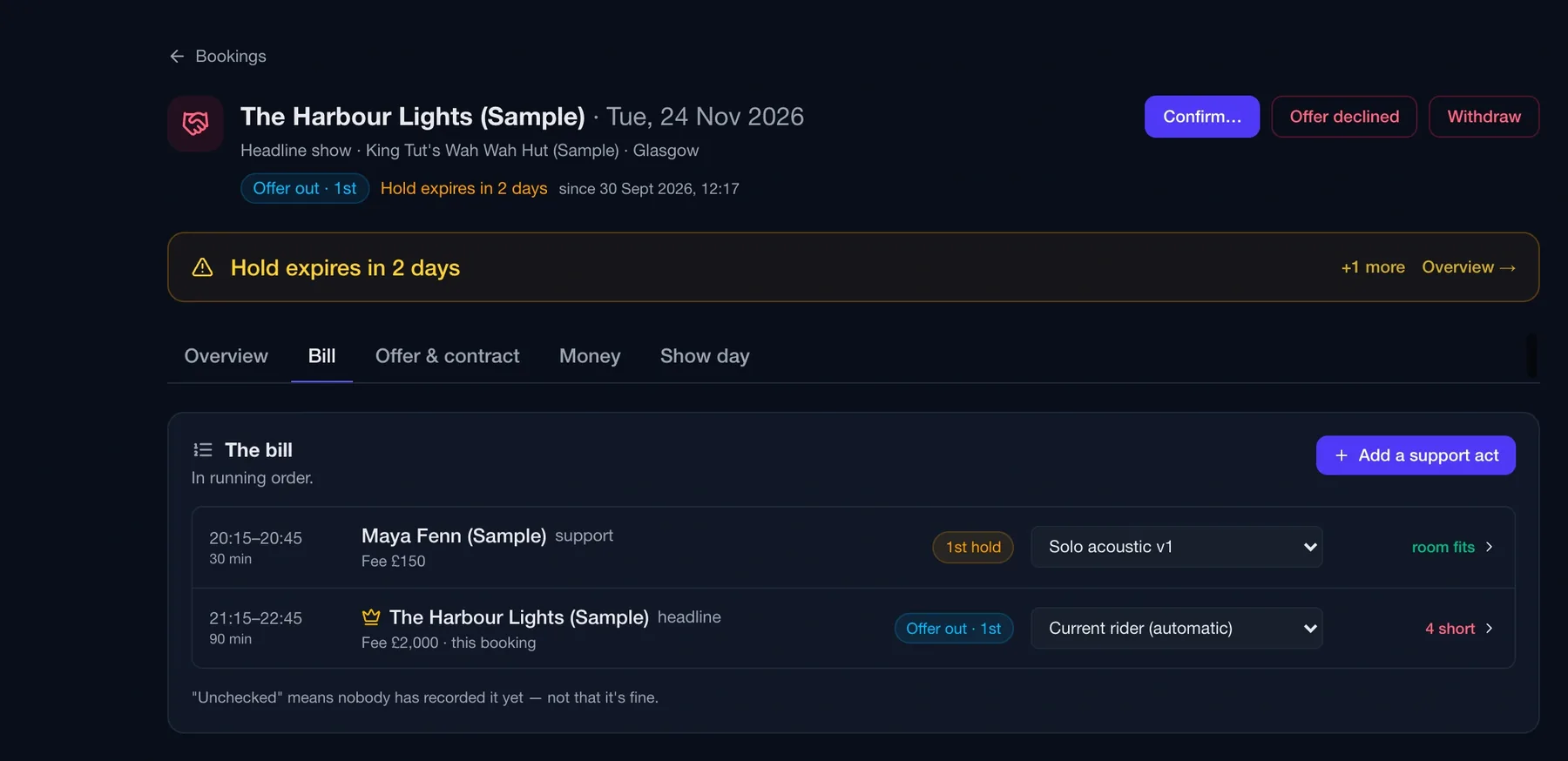
Support acts on a headliner's night, each with its own fee, deal and rider, locked to the headliner's date. Every act's rider is checked against the room — wedges, channels, stage size, dressing rooms — before anyone arrives.
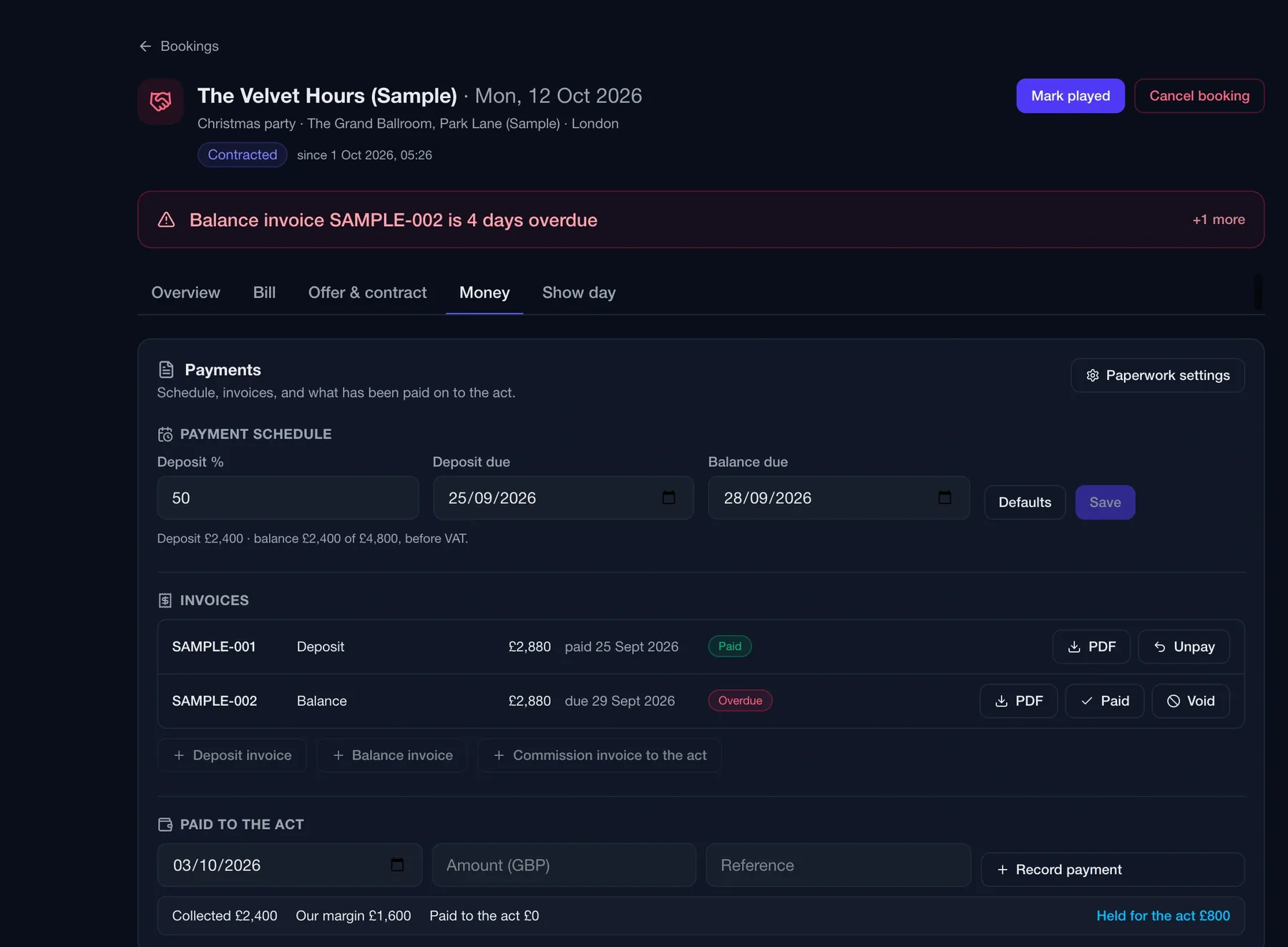
Engagement contracts the buyer signs by link; deposit and balance invoices to the buyer and commission invoices to the act, numbered and priced by the database; payouts and a commission statement per act and period. Overdue deposits surface in the Finance monitor.
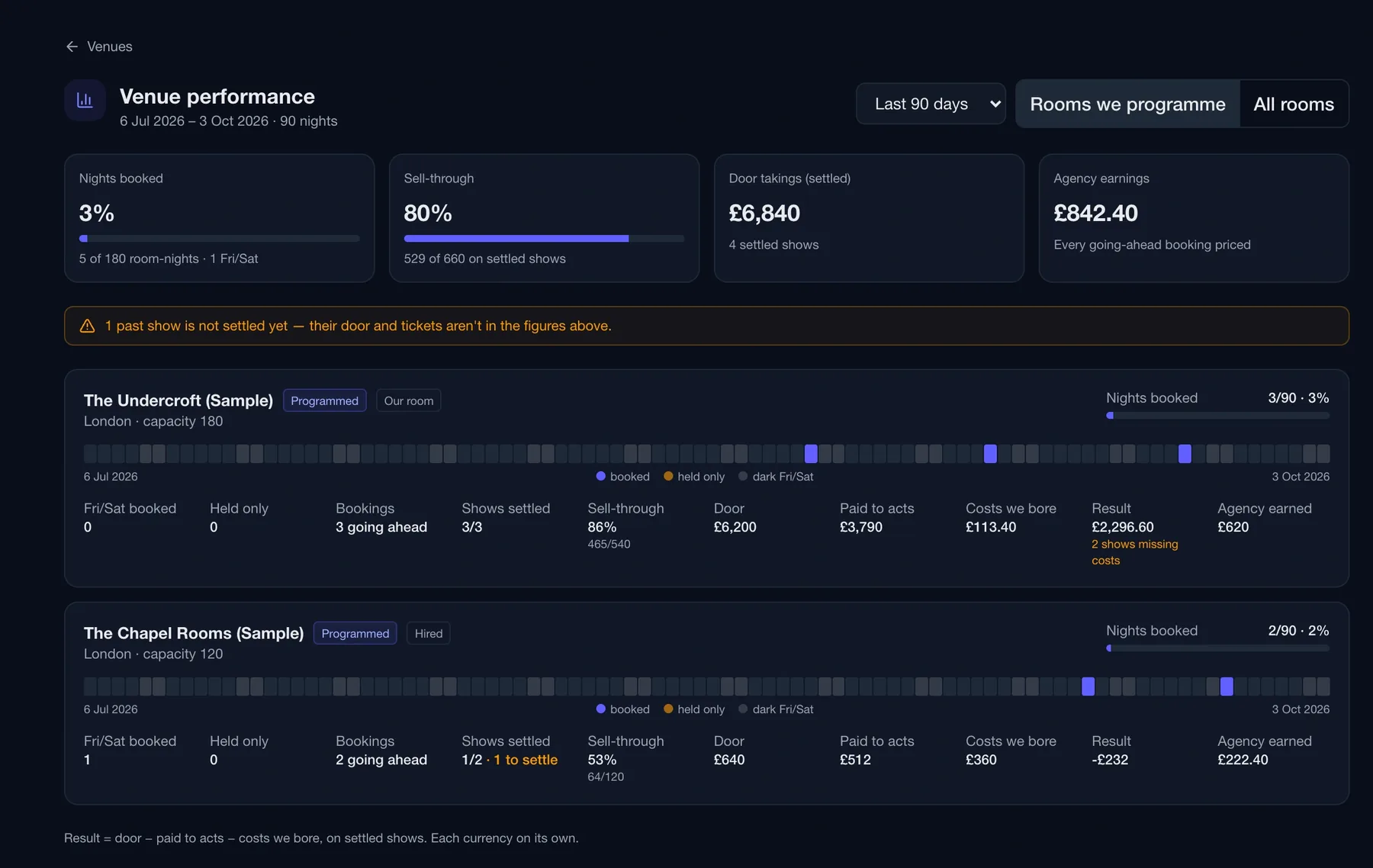
For the rooms you programme: nights booked, Fridays and Saturdays, sell-through, door, paid to acts, your earnings and — once the room's hire terms and costs are in — the result per night, per currency, never blended.
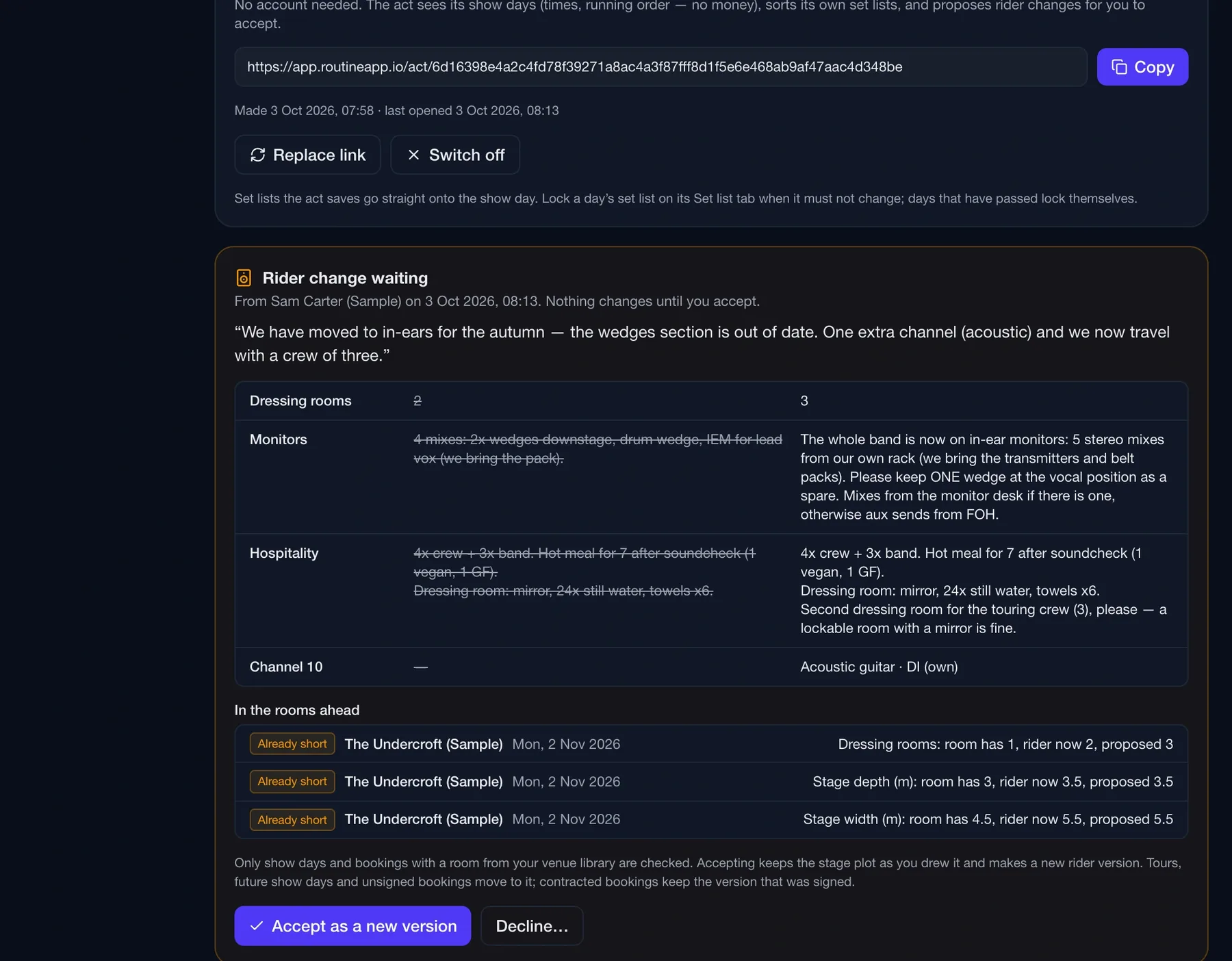
One no-account link per act: they see their confirmed show days (never the money), sort their own set lists straight onto the show day, and send rider changes as proposals you accept into a new rider version or decline with a reason.
Every enquiry, hold and confirmed night: who is playing, which room, who is paying, and what you earn — with agency earnings confirmed and contracted against what is still in the pipeline. An act booked twice on the same day, or a room shared with another act, is flagged on the row before it becomes a problem.
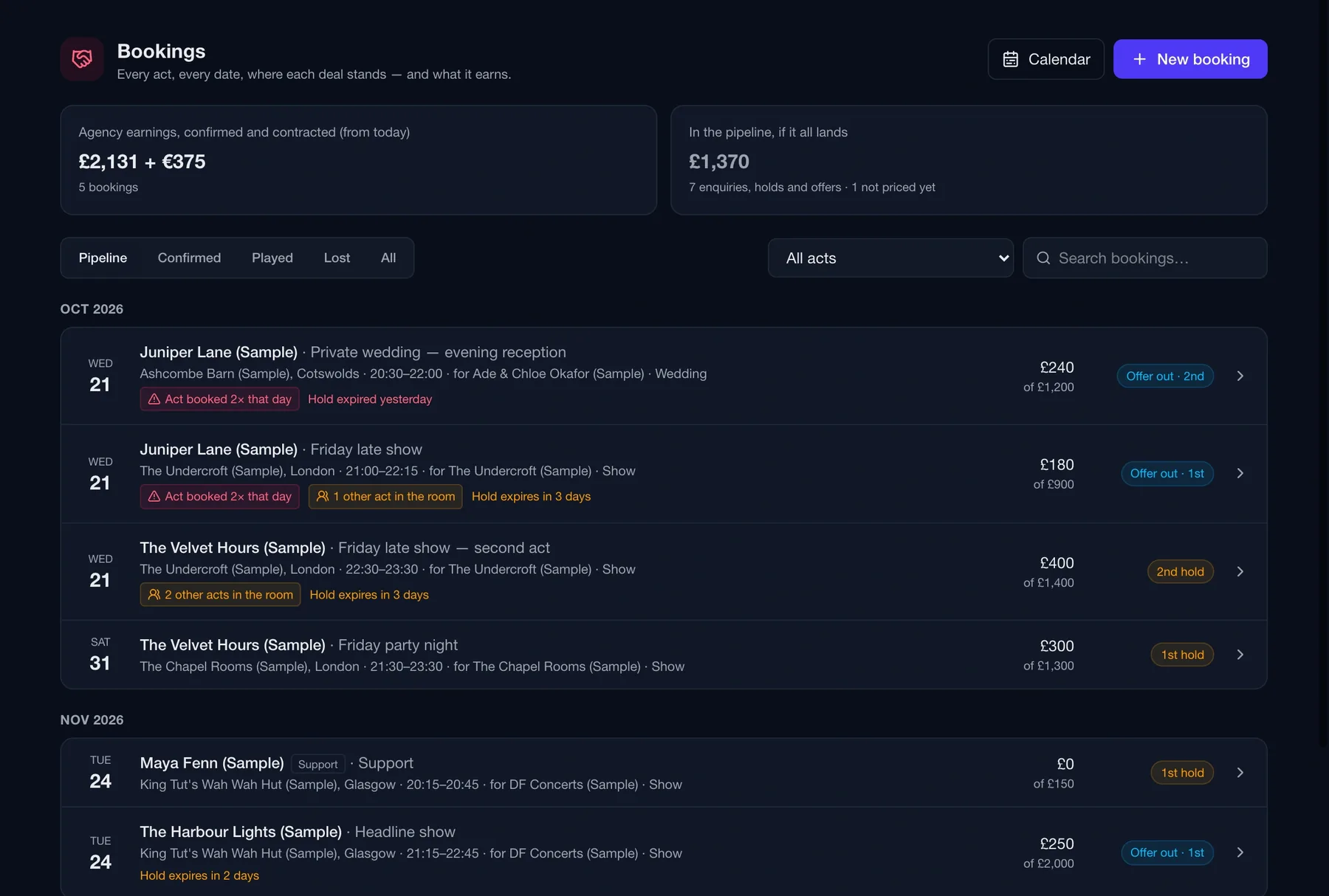
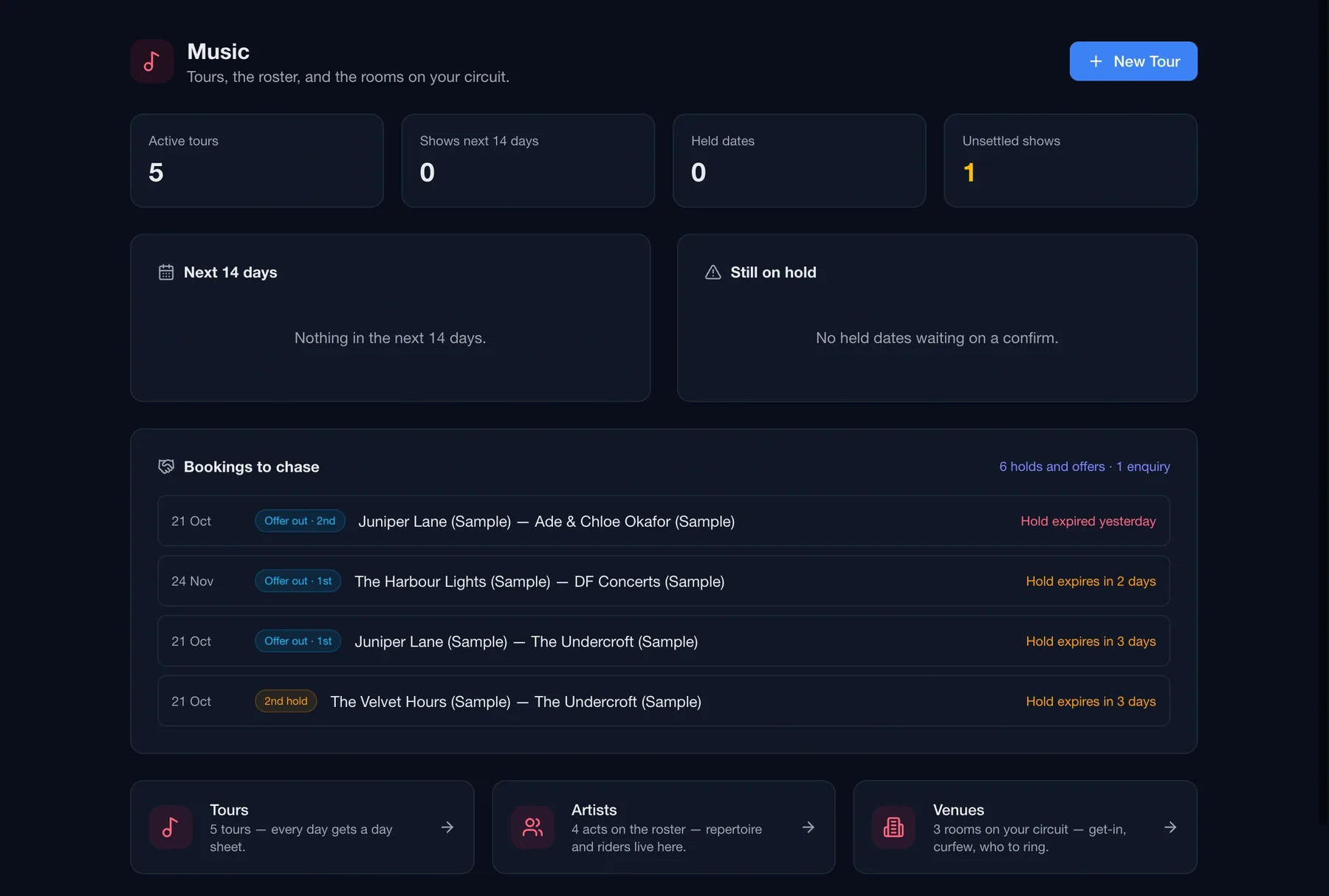
The Music home opens on the holds and offers that are expiring and the nights that have not been settled. The calendar shows the roster by act or by room, holds carry their place in the queue — first, second, third — and a double booking outlines itself.
Bookings to chase. Holds expiring in days and offers out with no answer, each with its rank in the queue and a link to the booking.
By act or by room. Flip the month view to see who is free and who is held, or which rooms are dark.
Confirm and release. Confirming a booking releases the holds it beat, so nobody is left holding a date that has gone.
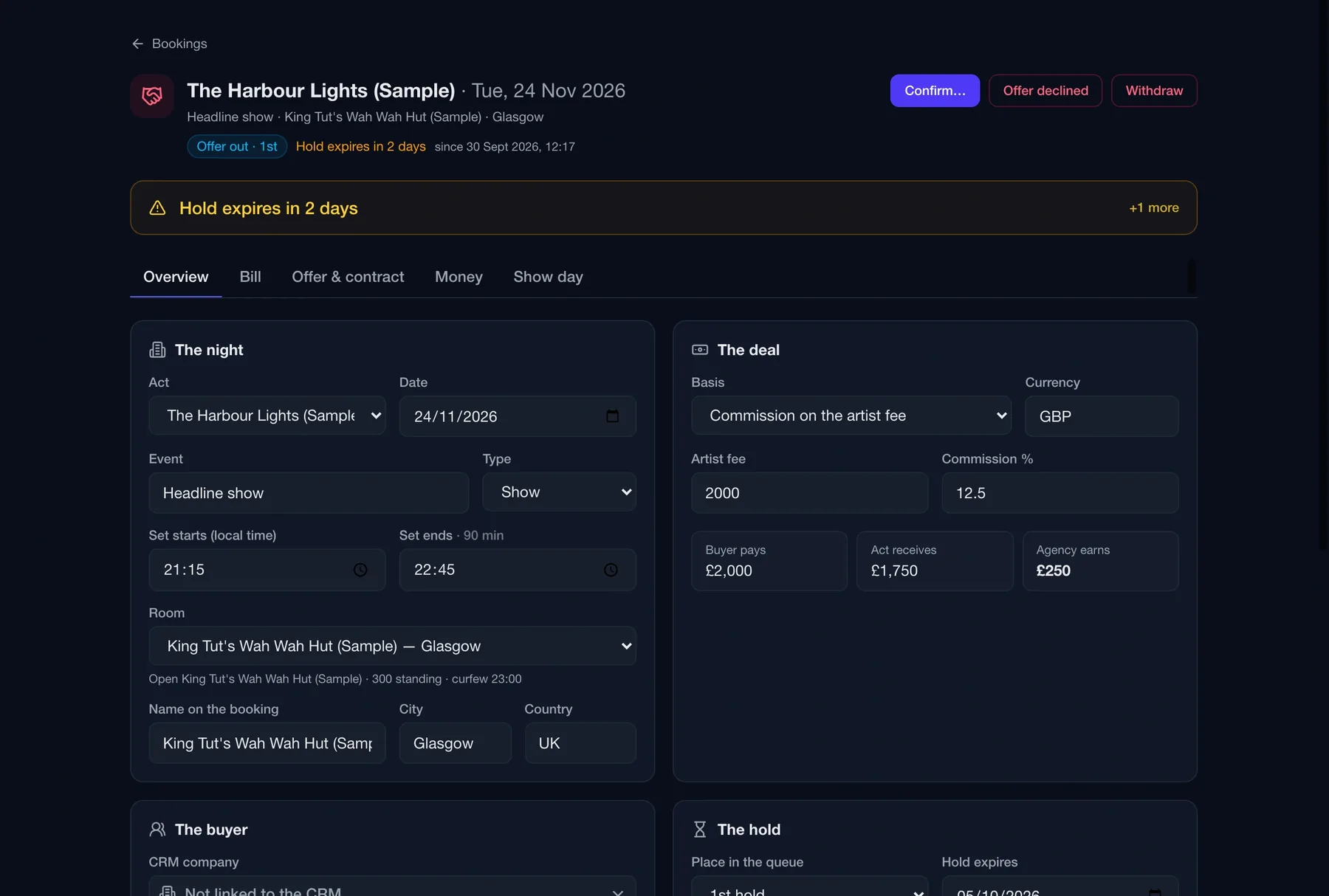
A booking holds the act, the night, the room, the buyer and the money — commission on the artist fee, or your margin — worked out live. The offer to the act carries the guarantee, the deal, the ticket tiers and the show costs, with a projection at 50%, 75% and sold out.
Buyer pays, act receives, agency earns. Commission on the fee or a margin between what the buyer pays and what the act receives, in the booking's currency, with the hold's place in the queue and its expiry on the same page.
Make the offer. See the night. Guarantee plus a percentage of net box office after expenses, tiers and comps, show costs fixed or as a share of box office — and what the show earns at each sell-through before anyone signs.
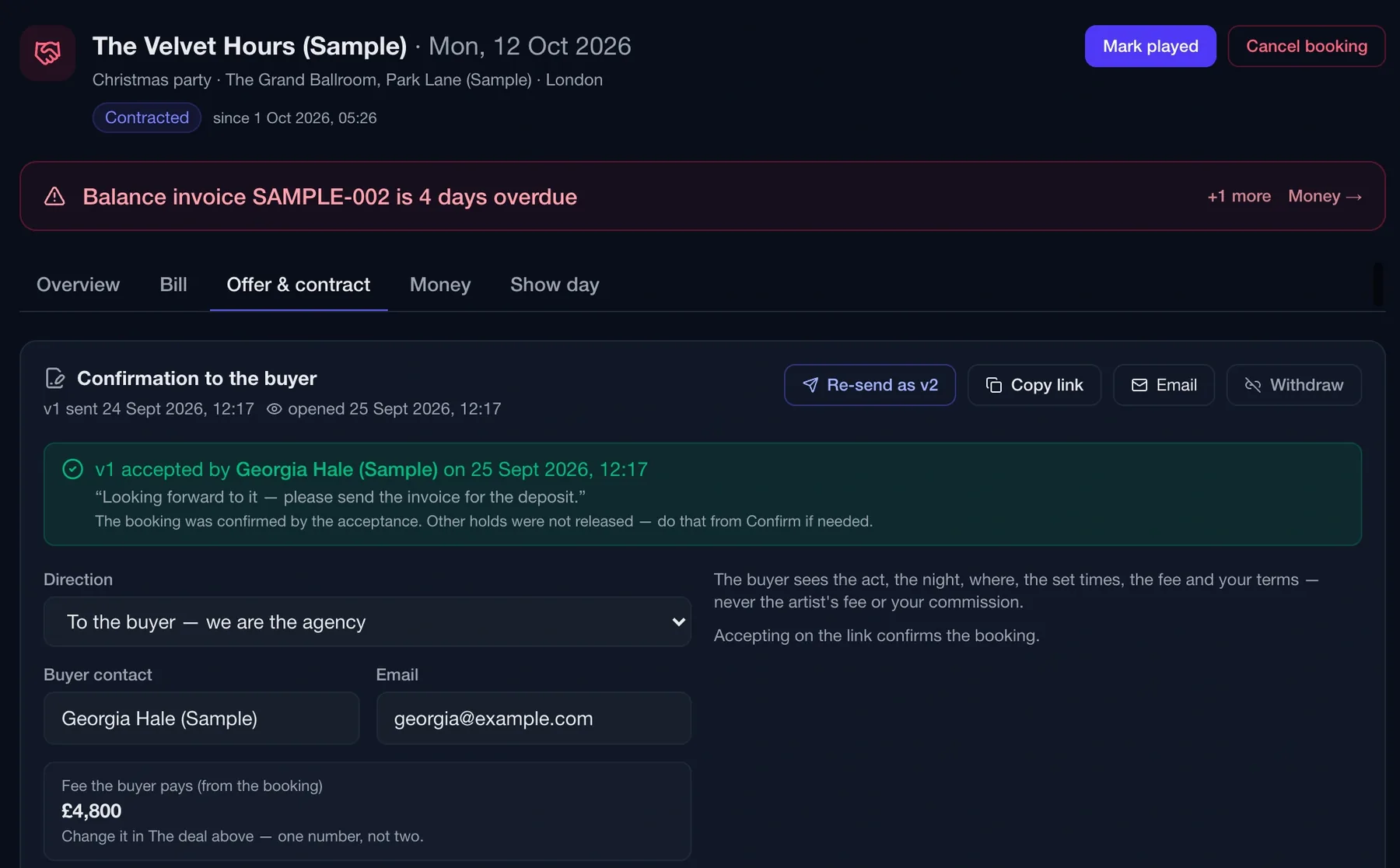
Send the buyer a confirmation as a frozen link. They see the act, the night, the room, the set times, the fee and your terms — never the artist's fee or your commission — and accept or decline once. Accepting confirms the booking, releases the holds it beat and notifies you.
Versioned. Re-send as a new version if the terms change; the one they accepted stays on record with who accepted it and when.
Copy link, email or withdraw. Send it through Routine or paste it into your own mail; withdraw it if the night falls through.
Then the paperwork. An accepted confirmation leads to the engagement contract and the deposit invoice on the Money tab.
Contracts the buyer signs by link. Deposit and balance invoices, numbered and priced only by the database, marked sent, paid or void — never edited or deleted. Payouts to the act, and the balance between you. Support acts on the bill each carry their own fee, deal and rider, checked against the room.
Deposit, balance, payout. A payment schedule per booking; an overdue balance invoice is called out on the booking and in the Finance monitor; what you collected, your margin and what is held for the act are on one line.
Supports on the bill. Each act in running order with its own fee, deal and rider version, locked to the headliner's date — and every rider checked against the room.
For the rooms you programme: nights booked, Fridays and Saturdays, held only, bookings going ahead, shows settled, sell-through, door, paid to acts, the costs you bore, the result per night and your earnings — per currency, never blended. A show played and not settled is called out above the figures.
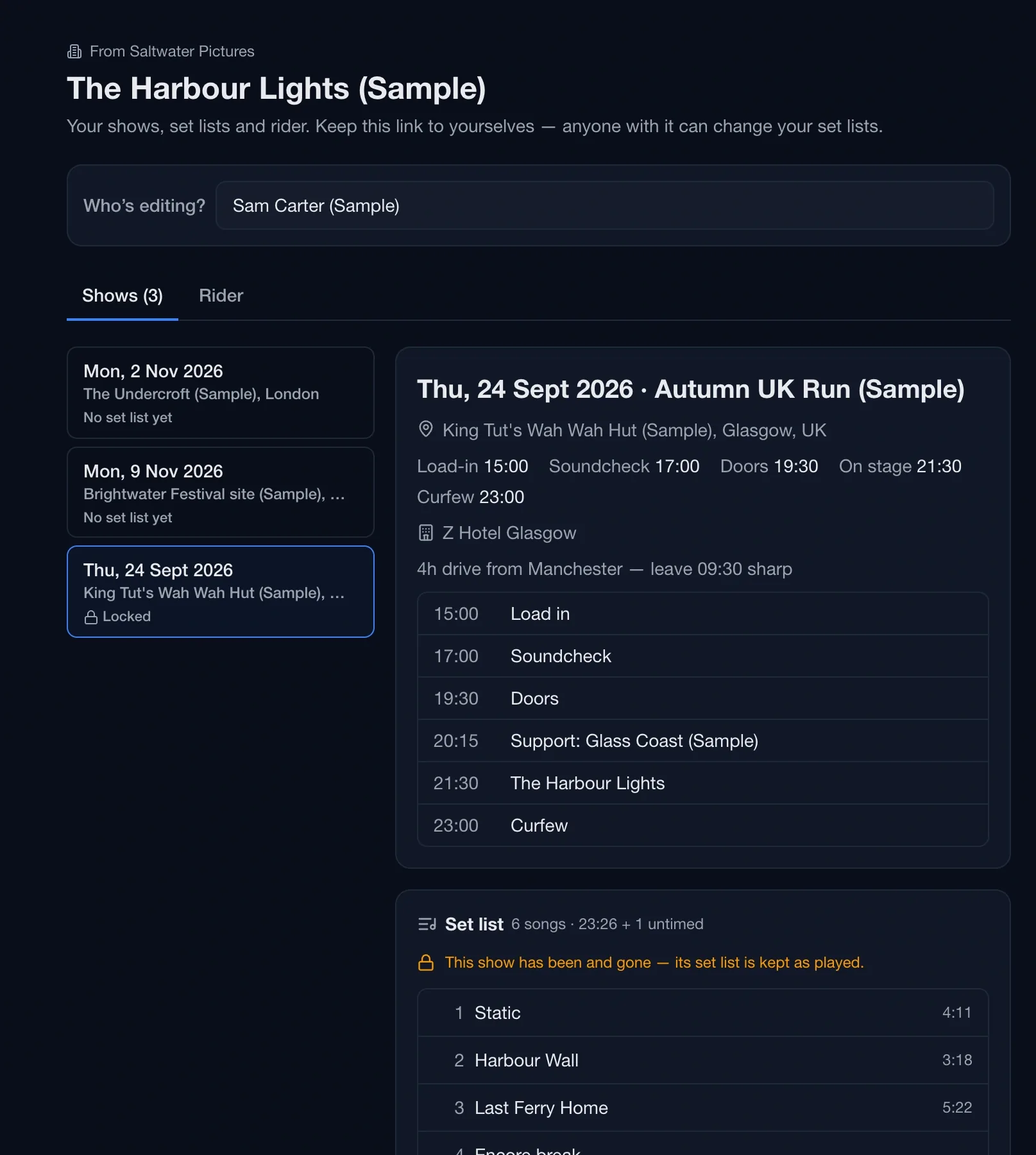
Each act gets its own no-account link from the artist page. From it they see their confirmed shows and sort their own set list straight onto the day sheet — never the money. Rider changes arrive as proposals: a line-by-line diff and a check against every room they are booked into. Accept, and a new rider version is born; contracted bookings keep the signed one.
A line-by-line diff, checked against every room. Monitors, hospitality, channel count — each change shown old against new, and each room ahead marked already short or fine, before you accept it as a new version.
Their shows. Their set list. Load-in, soundcheck, doors and on-stage from the day sheet, and a set list they sort themselves until the tour manager locks it or the day passes.
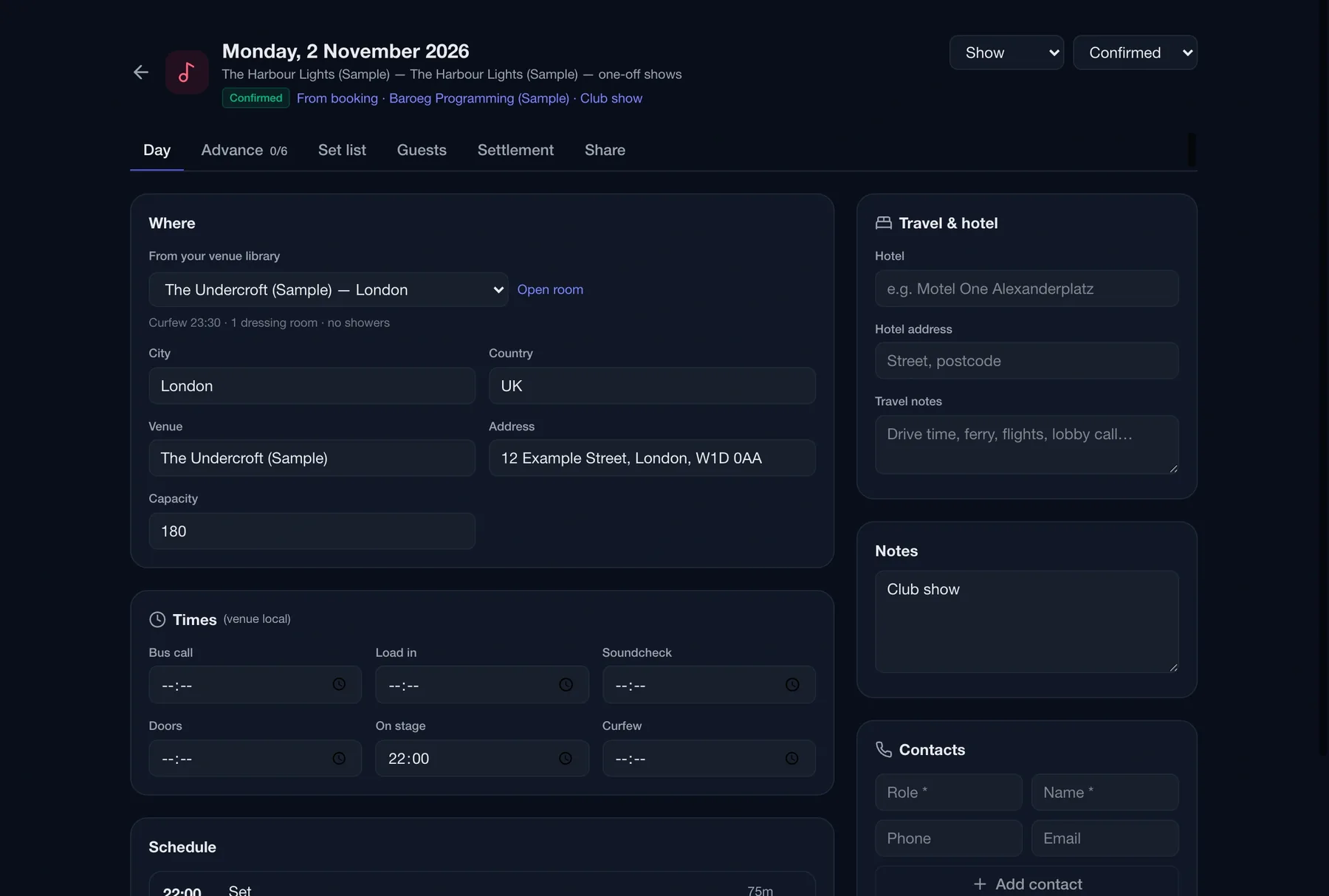
A confirmed booking becomes the show day the crew run on — day, advance, set list, guests, settlement and share — with the deal one click away. Everything from the office side lands on the day sheet the bus reads.
Day, advance, set list, guests, settlement, share. Six tabs on one show day: where and when, what still needs advancing, the running order, the comp list and door mode, the money, and the live links.
From the room you booked. Venue, address, capacity and curfew come from your venue library; travel and hotel sit alongside.
Times stay local. A 17:00 soundcheck in Glasgow is 17:00 on every screen, whatever timezone anyone's phone is in.
Tour tools age badly: stale PDFs in promoters' inboxes, day sheets that changed after they were sent, guest lists on paper at the door. Routine's live links fix the drift — everyone always sees the current version, and the sensitive ones expire themselves.
Crew see their tours only. Per-tour visibility for crew logins — Master Tour's best idea, enforced in the database.
Calendars stay in sync. Subscribe to the itinerary by URL and every routing change lands in Google, Apple or Outlook calendars.
Print when you need to. Watermarked day sheet, set list, guest list and tech rider PDFs for the venues that want paper.
Import an itinerary from any CSV export — including Master Tour's — and the run is in Routine in a minute: dates, cities, venues, times and hotels, with anything unreadable reported rather than guessed.
One platform, one directory. Tour crew draw from the same people directory as productions and events — book the same rigger for both.
The money is watched. A show played and not settled, or a deposit invoice overdue, shows up in the Finance monitor — before anyone forgets.
Sample roster included. Load the sample data and the pipeline, calendar, offers, bill, money and act link on this page are all there to click through.
Try it free for 14 days — or tell us about your roster and we'll walk you through it.
No card needed.